Why Google AdSense Isn’t Enough: Top Alternative Ad Networks

Marketing tools
Updated Jun 1, 2026
- Published
- Updated

You know what? If you’ve ever tried to make money from your website, you’ve definitely heard of Google AdSense. It’s like the gold standard of online advertising – those text and display ads that show up on millions of websites around the world. AdSense has been the go-to choice for publishers since 2003, and for good reason.
So what is Google AdSense? Think of it as Google’s way of sharing their massive advertising revenue with website owners. When people search on Google, they see ads. When they visit your website, they can see those same ads, and you get paid when visitors click on them. It’s a simple concept that has made millions of publishers money over the years.
Here’s the thing, though. Just because AdSense is popular and trusted doesn’t mean it’s perfect for everyone. Lots of website owners start looking for other options when they run into these common problems:
- Getting approved is getting harder every year. Google has become incredibly picky about which websites can join AdSense. Many perfectly legitimate sites get rejected for unclear reasons, leaving publishers frustrated and looking for alternatives.
- The money isn’t what it used to be. AdSense rates have been declining for years as more publishers compete for the same advertiser budgets. Many publishers find they’re earning less per click than they did just a few years ago.
- One strike and you’re out. Google can suspend or ban AdSense accounts with little warning, often for policy violations that publishers didn’t even know they were making. Losing your AdSense account can be devastating if it’s your main income source.
- Limited control over ads means you can’t always choose what appears on your site. Sometimes the ads don’t match your content or audience, leading to lower click rates and earnings.
- In 2026, the CPM floor is collapsing – many publishers report 50-90% AdSense revenue loss due to Google’s AI Overviews expansion, especially following the December 2025 algorithm update (with the May 19, 2026 Google I/O AI Mode overhaul potentially worsening the effect).
If you’re running a blog, news site, or any kind of website, these limitations can seriously impact your ability to make money online. The good news is there are plenty of other ad networks out there that might work better for your specific situation.
Ioannis Giouroukakis, Head of Publishers at Monetag:
“After working with hundreds of publishers and many more ad stacks over various niches, GEOs, and traffic tiers, here’s what I witnessed: publishers with several monetization layers can survive AdSense’s volatility. So, the publishers who win in 2026 are the ones who monetize with a stable, welcoming, and reliable network that doesn’t condition them but allows them to layer in more revenue streams as they scale.”
TL;DR
AdSense is seen as a reliable tool, but it forces you to navigate rejections with no explanations, earnings that keep shrinking, and overnight account bans. The good news: you’ve got real options that are effective even when you’re just starting, and if you have international traffic or Yahoo and Bing search traffic. There are even some more AI-optimized options that are specifically for over 50K visits/month, and others for when you want something extra and no changes to your site.
Let’s analyze Monetag, Media.net, Ezoic, Mediavine, and Infolinks and debate whether the key lies in finding a reliable partner or diversifying.
Most importantly, let’s see how to prevent an AdSense account suspension from wiping out your entire income.
1. Monetag: The best Google AdSense alternative overall
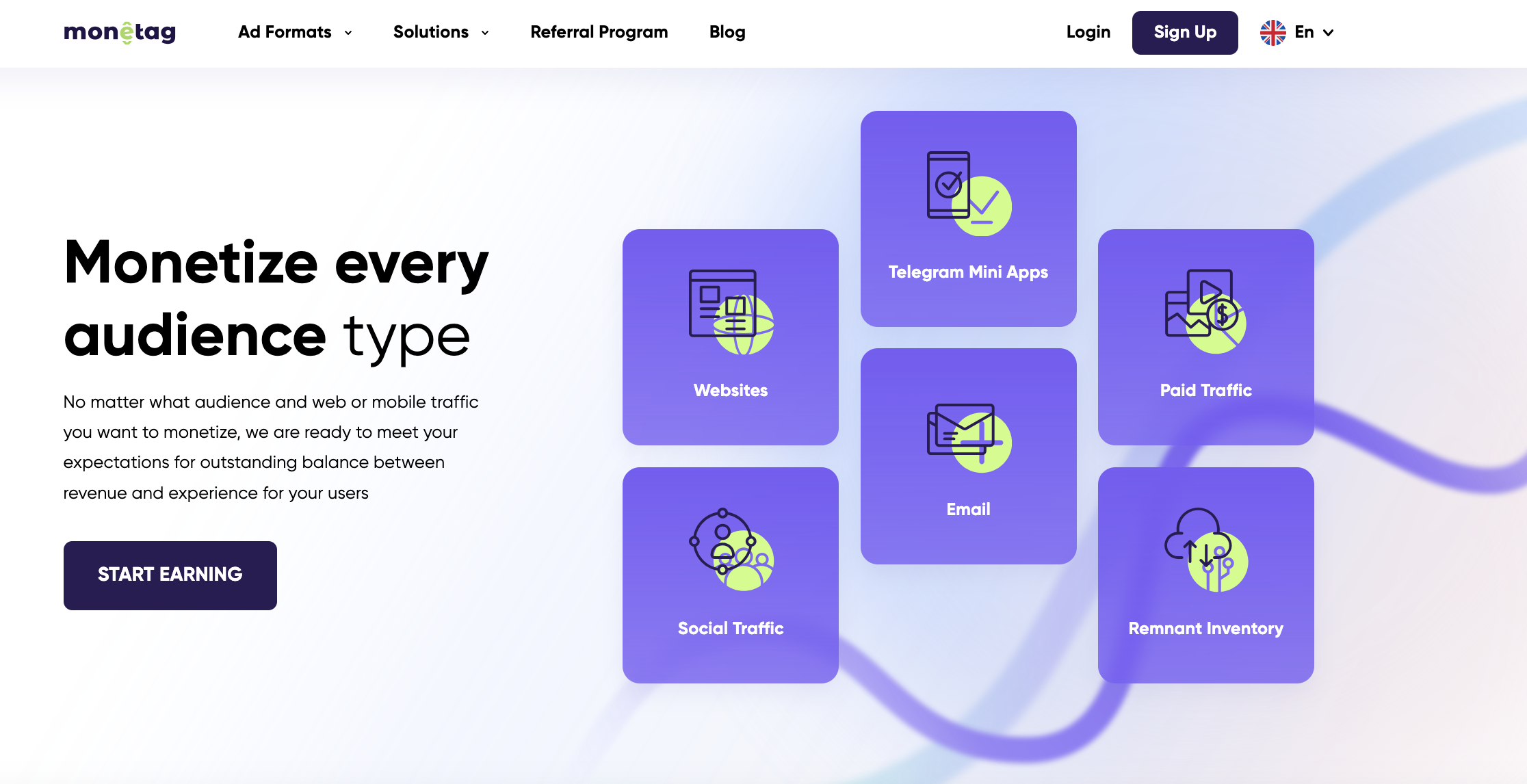
When people ask about alternatives to AdSense, Monetag is usually the first recommendation that comes up. There’s a really good reason for that: they solve most of the problems that frustrate publishers about AdSense, especially the approval headaches and payment delays.
Why choose over AdSense?
The biggest difference is getting started. While AdSense might reject your application for mysterious reasons, Monetag welcomes almost any legitimate website. You don’t need perfect content, thousands of visitors, or months of waiting to start earning money from your site.
They offer way more flexibility in ad formats too. Instead of just the standard display and text ads, you get push notifications, popunders, vignette banners, smartlinks, in-page push. This variety means you can test different approaches and find what works best for your specific audience.

The payment system is incredibly publisher-friendly. You can get paid weekly starting from just $5, which is a huge improvement over AdSense’s monthly payments with higher minimums. For small publishers or those just starting out, this quick access to earnings makes a real difference.
Monetag also works great with international traffic. While AdSense heavily favors visitors from Tier-1 countries like the US and UK, Monetag has advertisers from worldwide. Whether your visitors come from India, Brazil, or anywhere else, you’ll still make decent money.
And let’s see the numbers. With Monetag, you get 80% of the revenue generated by your inventory, and $1.5 – $12 CPM in Tier 1, $0.30 – $1.5 CPM in Tier 2, with SmartLink and high-intent social traffic reaching as high as $22+ CPM.

We take fraud protection seriously, scanning every campaign for malware and suspicious activity. This protects both you and your visitors, building trust that leads to better long-term earnings. The setup process is straightforward with multiple integration options, so you don’t need technical expertise to get started.
By comparison, the AdSense revenue share is 68%, their minimum payout threshold is $100, and their RPM is $0.25 – $3, changing to $5 – $20 for higher value niches.
So, to sum up, with Monetag you get:
- Easy start
- Many ad formats
- Quick payments from just $5
- 80% revenue share
- $0.30 – $12 CPM between Tier 1 & Tier 2
- All countries accepted
- Serious fraud protection and clean ad feed

Who Monetag is best for?
If AdSense has rejected your application or you’re worried about getting approved, Monetag is probably your best alternative – of course, if you have a legit, high-quality site. They’re also perfect for sites with international audiences that don’t perform well with AdSense’s US-focused advertising. New publishers who want to start earning quickly instead of waiting months for approval find Monetag incredibly refreshing. And, publishers without websites – just social media with big traffic flow – can also join and get the most out of Monetag smartlinks.
Also, Monetag offers high-impact formats like Popunders for engagement-driven audiences, non-intrusive options like In-Page Push for the most relevant offers for UX-sensitive publishers, and it is highly optimal for entertainment, fandom, sports, and many other types of traffic. However, it can create underperformance risk for publishers who deploy a single format without testing which format actually fits their specific audience behaviour.
Monetag is a serious contender even for app monetization sites, having just won the 2026 Business of Apps Top App Monetization Platforms award.
Real results from publishers
Here is some evidence of the results publishers reach with Monetag:

2. Media.net

Media.net is probably the closest thing you’ll find to a direct AdSense competitor. They’re powered by Yahoo and Bing’s advertising network, which means they have access to high-quality advertisers and can offer competitive rates for the right kind of traffic.
Why choose over AdSense?
The contextual ad targeting is excellent, often matching your content better than AdSense does. Since they’re focused on search advertising from Yahoo and Bing, the ads tend to be highly relevant to what your visitors are actually looking for.
Revenue potential can be higher than AdSense, especially for sites with good US and UK traffic. Publishers often report higher click-through rates because the ads are more relevant and better integrated with their content.
They offer more control over ad appearance and placement compared to AdSense’s strict formatting requirements. You can customize colors, sizes, and positions to better match your website design.
The approval process, while still selective, tends to be more transparent than AdSense. When they reject applications, they usually provide clearer reasons, making it easier to fix issues and reapply.
While they don’t publicly disclose their revenue share for publishers, their minimum payouts are $100, and their CPM estimates $1 – $ 1.25.

Who Media.net is best for?
Content-rich websites with primarily English-speaking audiences often see excellent results with Media.net. News sites, blogs, and informational websites that produce high-quality content and get most of their traffic from the US or UK are ideal candidates.
However, Media.net gets search intent signals from Yahoo and Bing, so it becomes optimal for evergreen finance and how-to bloggers with commercial search-question-based content type. It does become weak when you primarily have traffic that’s not from the US, UK, or Canada – regardless of your content quality and volume.
Checking their customer reviews, we noticed Media.net doesn’t have a lot of online reports. However, their 17 G2 verified reviews describe them as easy to work with, while complaining about their outdated reporting console.
3. Ezoic

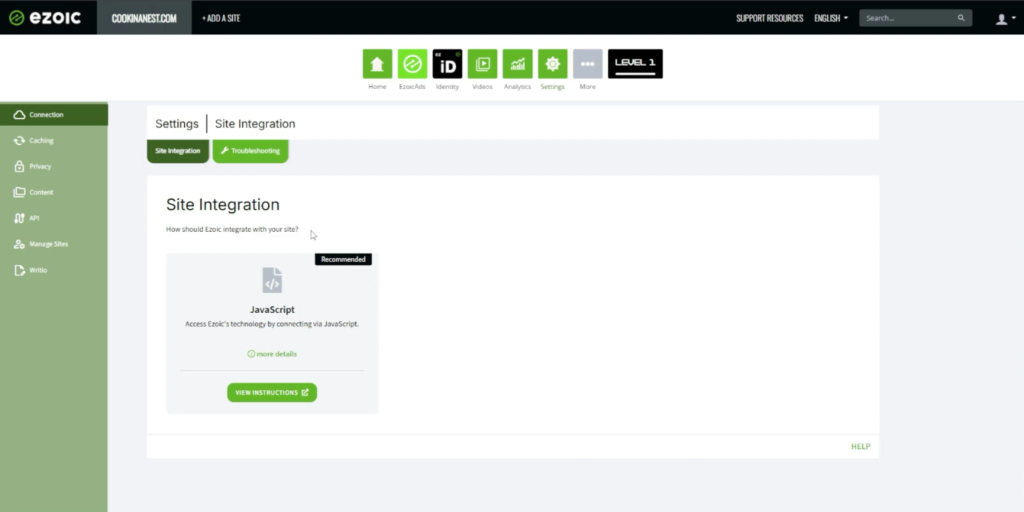
Ezoic takes a completely different approach from traditional ad networks. Instead of just serving ads, they use artificial intelligence to optimize everything about your website’s advertising, from ad placement to loading speed to user experience.
2026 Integration Features Change
Why choose over AdSense?
The AI optimization means your ads get better over time without you having to do anything. Ezoic tests different ad placements, sizes, and types automatically, finding the combination that makes you the most money while keeping visitors happy.
There are no traffic requirements to get started, unlike many premium networks that want you to have thousands of visitors before they’ll consider you. This makes Ezoic accessible to smaller publishers who are still growing their audience.
They offer additional tools beyond just advertising, including site speed optimization, analytics, and even web hosting. It’s like getting a complete website optimization service, not just an ad network.
Revenue potential is often higher than AdSense because they’re not limited to Google’s advertisers. Ezoic works with multiple ad exchanges and networks, creating more competition for your ad spaces.
Ezoic’s revenue share is one additional bottom-of-page ad for the free plan and 10% of the publisher’s total revenue. Also, their minimum payout is $20 (net 30 schedule), and their average CPM $3 – $12 per 1k pageviews, while low-performing sites can even get $0.50 – $3.

Who is Ezoic best for?
Already grown websites that want to maximize their advertising revenue further, without constant manual optimization love Ezoic’s automated approach. Publishers who are comfortable with technology and want detailed analytics about their site’s performance find the additional tools valuable.
Keep in mind that as of February 2026, Ezoic raised its entry threshold to 250,000 monthly users, making it a choice for established multi-topic blogs and web tools operating at scale. As for niche affiliate sites and medium SEO publishers (its previous core audience at 10k/session) – it is now a hard pass.
Just consider that according to their guidelines, working with Ezoic your site has to comply with the Google Publisher Policies. Get rejected by AdSense’s policy requirements, and you can’t work with Ezoic either.
4. Mediavine
Mediavine offers many of the benefits of premium networks while being more accessible to growing publishers.
Particular Implementation Requirements
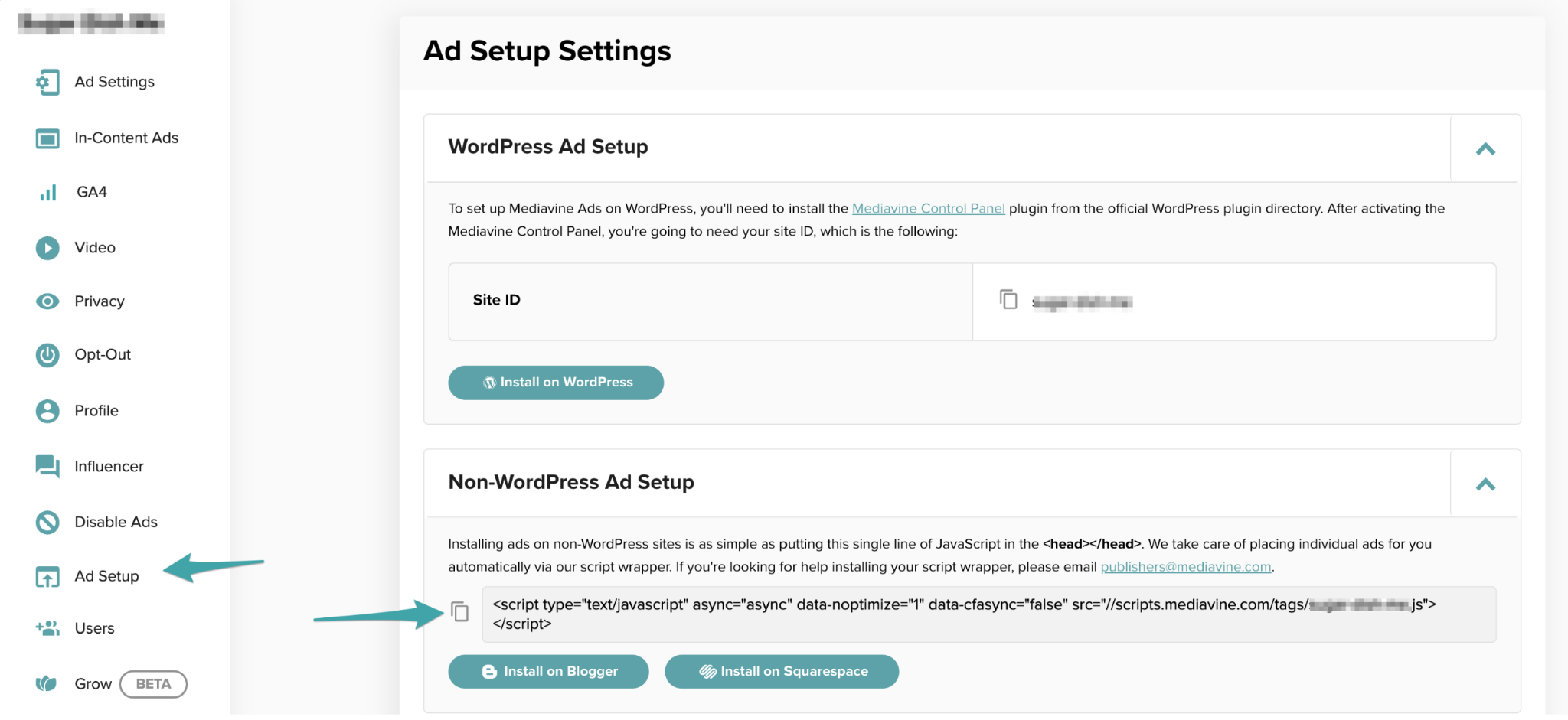
While checking their platform effectiveness, we came across Mediavine’s Script Wrapper – a one-time setup, no optimization system, that can present significant operational constraints. It’s worth mentioning that their help-desk warns against modifying it, as “any attempts at additional optimization can impact ad performance.”
This means that you must take additional steps and exclude Mediavine’s script from any speed optimization plugins, including working with WordPress or similar plugins aimed at optimizing your page speed.
Why choose over AdSense?
The traffic requirement is more reasonable at 50,000 monthly sessions, making it achievable for growing websites that aren’t quite ready for AdThrive’s requirements.
They focus heavily on user experience, ensuring ads don’t hurt your site’s loading speed or search engine rankings. This balance between monetization and site performance is often better than what publishers achieve with AdSense.
Video content integration is excellent, with high-paying video ads that can significantly boost earnings for sites that produce or feature video content.
The approval process is thorough but fair, with clear guidelines about what they’re looking for and constructive feedback when applications are declined.
And, the requirements:
- The application process includes a waiting period while they review your site thoroughly. This can take several weeks, unlike AdSense’s quicker approval process.
- They have strict content guidelines and prefer family-friendly websites. Some niches that work with AdSense might not be suitable for Mediavine’s advertiser requirements.
- There’s an exclusive relationship requirement, meaning you can’t use other display ad networks alongside Mediavine once you’re accepted.
When it comes to revenue shares, publishers get 75% when they generate less than $100K/year, going up to 90% for $500K+ annually, with various other thresholds. Their minimum payout is $25, with a net 65 term, while their CPM is $22 – $44.
Who is Mediavine best for?
Content creators in lifestyle niches like food, travel, parenting, and home improvement often saw great results with Mediavine. Websites that produce engaging, family-friendly content and have steady, growing traffic are ideal candidates.
Currently, Mediavine asks sites to demonstrate $5,000 in annual revenue for access to its main network, becoming relevant only for seasoned lifestyle and food bloggers with proven monetization history. This creates a hard pass for fast-growing content sites that must find alternative networks to increase their net ad income before qualifying.

Mediavine’s reviews also highlight another thing you have to consider, beside the $5K minimum ad revenue. Specifically a 90 days exclusivity contract from when you start, during which they don’t allow you to monetize with any other network.
5. Infolinks

Infolinks offers something completely different from traditional display advertising. Instead of banner ads, they monetize the text content you’ve already created by turning relevant words and phrases into clickable ads.
Why choose over AdSense?
The in-text ads don’t take up additional space on your website, unlike banner ads that require dedicated placement areas. This means you can use Infolinks alongside AdSense or other networks without competing for the same screen real estate.
Installation is simple – just add their code to your site and they automatically identify relevant text to monetize. There’s no need to create ad placements or optimize positioning.
They work well with content-heavy websites that have lots of text but limited space for traditional banner ads. Blog posts, news articles, and informational pages are perfect for in-text advertising.
The approval process is straightforward and they accept most legitimate websites regardless of traffic level.
Infolinks offers a 70% generated revenue for publishers, minimum payouts from $50 on net 45 schedule, $1 – $5 CPM for 1K impressions.

Who is Infolinks best for?
Content-heavy websites that want to monetize existing text without adding more visual advertising often find Infolinks useful as a supplementary revenue source. Publishers who are already using AdSense or other networks can add Infolinks for additional income without major layout changes.
Since its InText format relies on scanning content and matching ads to the most valuable keywords, it is great for long-form blog publishers that prosper with in-text ads integrated into content. It falls short, though, for publishers with Tier 2 and Tier 3 traffic, where keyword bids are too low for meaningful payouts, regardless of content quality.
One thing we noticed during this review was their Crunchbase Growth and Heat Scores, both of which dropped significantly during the past quarter. Their Heat Score, measuring the market interest based on its profile activity and presence in the media, currently stands at 10/100 the lowest out of all the other networks we viewed in this article. The lower their score, the lesser the attention from investors, partners, and competitors.
Summary of Google AdSense alternatives
| Service | Why choose over AdSense | Things to consider | Best for |
| Monetag | Less strict approval, weekly $5 payouts | Strong for international traffic, easy setup | Small and medium sites, social media publishers |
| Media.net | Yahoo/Bing ads, contextual targeting | Requires very high-quality content, US/UK traffic | Content-rich sites |
| Ezoic | AI optimization, no traffic requirements | Learning curve, layout changes | Growing websites |
| Mediavine | High-quality ads, good support | $5K monthly ad revenue | Lifestyle and content sites |
| Infolinks | In-text advertising, easy integration | Lower revenue potential | Text-heavy sites |
Final thoughts
Let’s be honest – Google AdSense isn’t disappearing anytime soon. Tons of website owners still make money through Google AdSense because it works well, pays fairly, and plays nice with all the other Google tools you’re probably already using. But here’s the thing: just because it’s popular doesn’t mean it’s your only option.
Maybe you’re tired of AdSense’s picky approval process. Maybe you want to earn more from your hard work. Or maybe you just want a backup plan in case something goes wrong with your AdSense account. Whatever your reason, there are real alternatives out there that can work for you.
The simplified view:
The Baseline
Starting Point
Google AdSense
$100
Min Payout
Works — until it doesn’t
Supplements & Contextual Alternatives
Media.net
$100
Min Payout
Quality English content for US / UK audiences
Infolinks
$50
Min Payout
Extra revenue without touching your layout
Stronger Performers, With Conditions
Ezoic
$20
Min Payout
AI handles optimisation — hands off
Mediavine
$25
Min Payout
Solid traffic, lifestyle niche
Best Entry Point, No Conditions
Best Overall Alternative
Monetag
$5
Min Payout
AdSense rejected you, or your traffic is global
Here’s what smart publishers do: they don’t put all their eggs in one basket. Start with a network that works for everyone, has no approval gates or traffic floors. Follow up by layering with others as your site grows, and build multiple income streams instead of depending on just one provider for all your ad monetization needs.
Stop wasting precious time and start earning within 24 hours, and keep 80% of what you make.