FIFA World Cup 2026: The New Era of Social Traffic Monetization

Trends
Updated Jul 7, 2026
- Published
- Updated
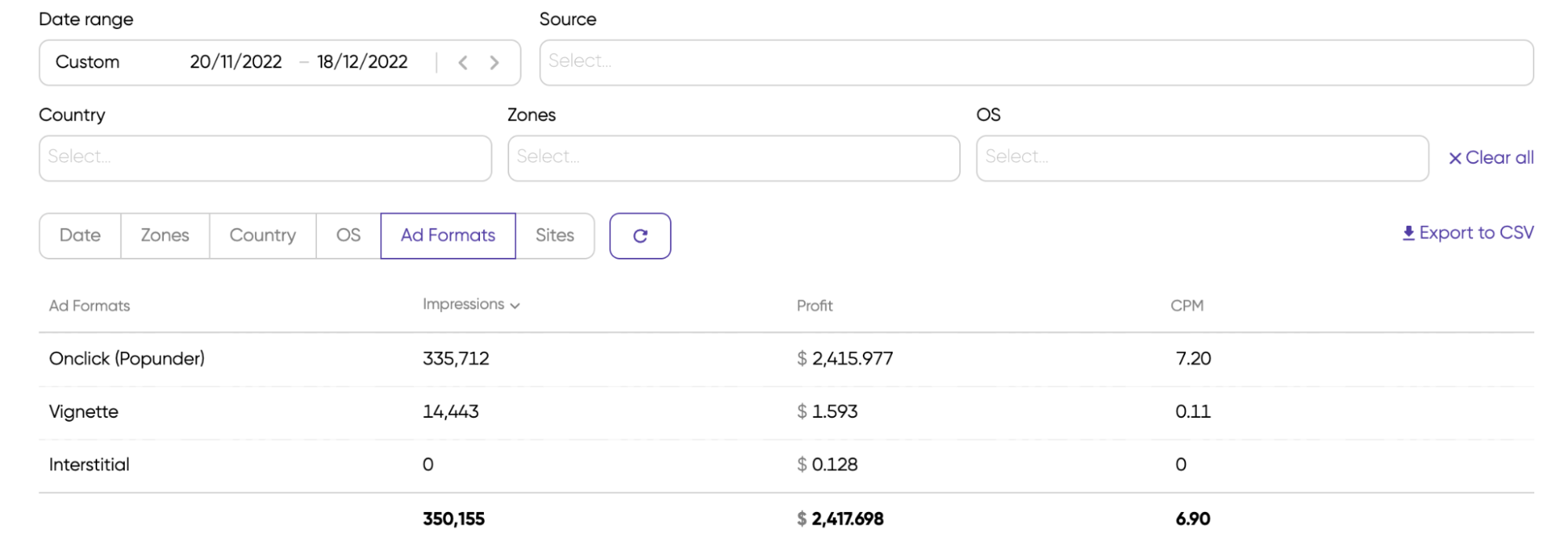
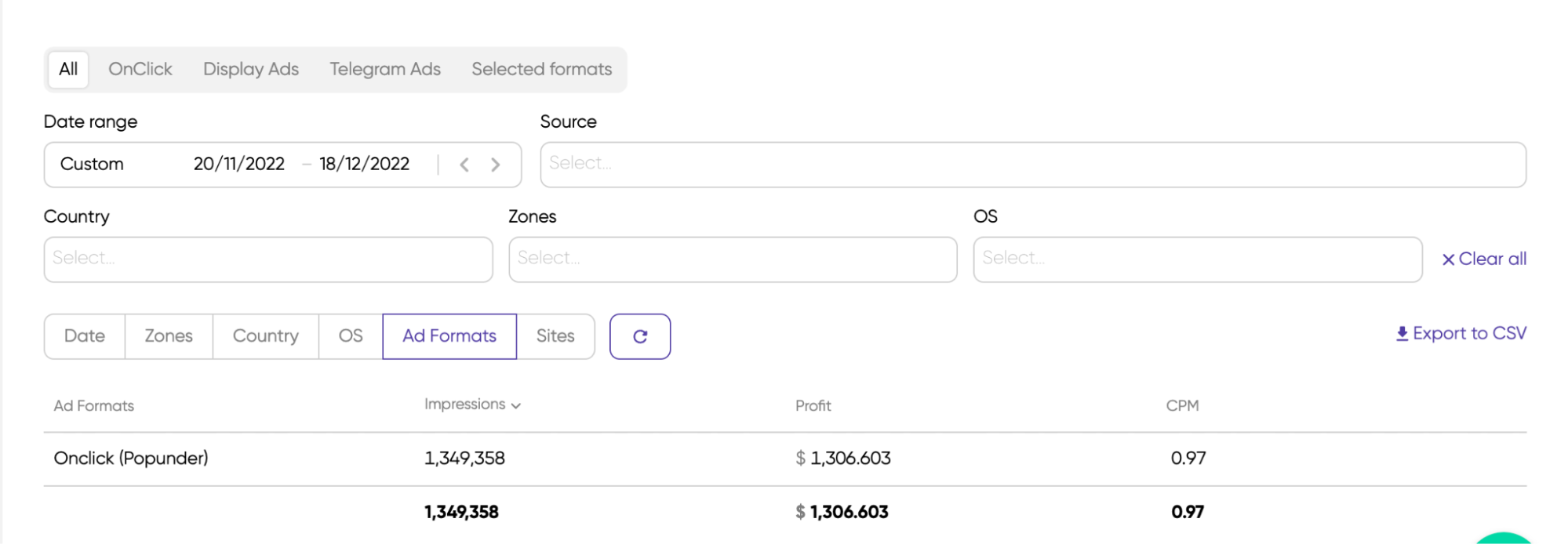
Every four years, the World Cup boosts CPMs and causes huge traffic spikes. Here is just a proof from Monetag’s internal statistics – 2 publishers who monetize their social media traffic:
Publisher 1:
Publisher 2:
Alexandros Paparoupas, Senior Publishers Partnership Manager:
Major matches can generate 2-5x higher traffic than regular sports days, especially during knockout stages or national team games. And most traffic now comes from social media platforms, especially Facebook, TikTok, Instagram, Telegram, and X.
But 2026 is different, and some start doubting it’ll change the traffic growth for the better. For the first time in history, FIFA is going all-in on social media. TikTok and YouTube are now official partners, and selected – only selected creators can use match footage for their content.
Quick note: it’s also different because we are launching Monetag World Cup Contest. Join and earn big this July!
Does it mean your social media can’t compete with the official creators anymore?
That creates both noise and opportunity. The publishers who understand the new landscape, who know where the traffic is coming from, what moves it, and how to convert it, will have their best tournament yet.
This guide covers the full picture: from building your social traffic engine to turning that traffic into revenue through Monetag smartlinks.
Publisher Opportunity
And What About Site Owners?
For site owners, the 2026 World Cup is a major organic traffic opportunity. Users will search for schedules, live scores, free streaming options, and match updates throughout the tournament, often during the games themselves.
watch World Cup free
World Cup schedule
World Cup live score
match updates
Why it matters: ranking for these queries can bring high-intent football traffic back to your site again and again during the tournament.
The New Media Landscape: What FIFA Changed in 2026
This year, a high-traffic window is going to be the longest in football history. The new 2026 World Cup edition features:
FIFA World Cup 2026
The Longest High-Traffic Window in Football History
More games, more audiences, more time to monetize.
48
Teams competing — the biggest field ever assembled
104
Matches total — up from 64 in previous editions
39
Days of live tournament action across North America
3
Host nations: USA, Canada & Mexico
+63%
More matches than ever before From 64 games to 104 — this isn’t just a bigger event. It’s a longer monetization session.
And also: more matches mean more content hooks, more match-day traffic spikes, and more opportunities to build audience momentum across the tournament. It changes the game you played last time, where you frontloaded everything into a few key matches.
But even this is not everything. Here are some more important details:
TikTok and YouTube Are Now Official FIFA Partners
This is the structural shift that matters most for social publishers.
- TikTok became FIFA’s first-ever Preferred Platform partner in January 2026. Under the deal, official broadcasters can livestream parts of matches directly inside TikTok’s dedicated World Cup hub, publish extended clips, and access exclusive FIFA-produced content for the platform.
In simple words: Selected creators get special access to FIFA archives and can make content using rare behind-the-scenes footage.
- YouTube followed in March 2026 as the second Preferred Platform. Media partners can stream select matches in full on their YouTube channels, broadcast the first 10 minutes of every match live – a first in World Cup history – and access every camera angle for custom content production.
In simple words: Both platforms are now focused on promoting World Cup content, with algorithms, infrastructure, and audience attention all supporting it.
So…hooray?
Well, not everyone thinks so. Some publishers are already panicking. They fear that if only selected creators and publishers get the extra reach and access, everyone else will be left behind.
Publisher Opportunity
What About Site Owners?
Social traffic is often driven by impulse and short attention spans. Websites benefit from longer sessions, stronger search intent, and more opportunities to monetize visitors throughout the tournament.
SEO traffic spikes: users search for “watch World Cup live”, “World Cup schedule today”, and match results while games are happening.
104 content opportunities: every match can become a preview, prediction, live update, or results article.
More monetization options: Push subscriptions, Interstitials, and Popunders often perform especially well during peak match hours.

Is The Competition Fear Real?
Not really.
Yes, TikTok has selected 30 official Creator Correspondents who will get strong promotion. And yes, YouTube has its own official partnerships and preferred content deals. But no, independent creators are not competing with them directly.
We have three arguments to calm you down.
- What real viewers think.
In Reddit discussions, many fans openly complain about buffering during key moments, the annoying ‘first 10 minutes only on YouTube’ format, and the overall FIFA’s ‘greedy’ approach. Many say they will look for unofficial streams or independent sources instead.
- What analysts add.
FIFA is using a hybrid model. Their partnerships with TikTok and YouTube aren’t meant to steal viewers from independent creators. Instead, they want to grow the overall audience for the World Cup. So, much more total attention and engagement are expected during the 2026 tournament – and no cannibalization that you might fear.
- What real examples show.
One great case study is the Brazilian CazéTV – a quick, happy-ending story. It shows that independent creators can still attract a big part of the young audience by delivering lively, authentic content and focusing on specific niches.
Just briefly – you can read the whole story at the link:
- In 2022, Brazilian streamer Casimiro Miguel (Cazé) launched CazéTV
- He created real-time reactions, jokes, chats, and actively motivated the audience to take part, too
- In 2026, his platform secured the rights to stream all 104 matches of the FIFA World Cup – completely free on YouTube
Quick Case Study
CazéTV × World Cup 2026
An independent Brazilian streamer launched in 2022. Four years later — all 104 World Cup matches, free on YouTube.
104
All World Cup matches — free CazéTV secured streaming rights for every FIFA 2026 game on YouTube. No subscription, no paywall.
4 yrs
From channel launch to World Cup rights
82%
Of CazéTV’s audience is under 44 years old
38%
Brazilian sports fans aged 18–24 watched CazéTV in June 2025
2022
Year Casimiro Miguel launched CazéTV
The lesson: Young viewers don’t want passive watching — they want to be part of the show. Personality and interactivity beat production budgets.
Yes, they are playing in a different league now – but they began exactly where you are now. And you have all the chances to attract viewers, too!
So, let Ioannis Giouroukakis, Head of Publishers at Monetag, sum it all up:
The fear is bigger than the reality. Yes, this World Cup looks very different from Qatar 2022 – TikTok, YouTube, and other platforms have secured official FIFA deals and will flood the zone with content. But that’s actually good news for publishers.
More platform investment means more people pulled into the social media ecosystem. And people don’t just watch one video and leave – they scroll, they engage, they discover. FIFA is projecting record-breaking numbers across every metric: live views, online interactions, and social engagement. The opportunity is bigger than ever. This is a moment to build alongside the wave, not hide from it.
But how to build alongside this wave, though?
Traffic Strategy: Building the Funnel for the World Cup
The best opportunity is not trying to beat ESPN or FIFA with goal clips. It’s making the kind of content they don’t focus on: predictions, local team content, country-specific reactions, or simple tactical analysis. A lot of people want this content, but big media companies barely make it.
So here are the traffic strategies suggested by Alexandros:
- Real-time engagement (live posting). This includes content with goals, highlights, controversial moments, memes, and reactions as they happen. Push notifications on key moments might also help: fast publishing is critical, speed actually beats quality here.
- Community (Telegram and WhatsApp). Here, you can go all in with fan polls and engagement posts that imply live discussions and commentary. Take care of localized content for national teams: fans root for their own.
- Pre-match activation (Match countdowns and reminders). This includes push notifications ahead of kickoff for those who run their sites, and also quick teasers in social media stories.
Here are quick sheet tables on how you can try to distribute your content:
Searchable explainers
Player & team breakdowns
“Why this happened” content
Evergreen World Cup questions
Local guides tied to host cities
Creator reactions
Fan culture & memes
Content-gap explainers
Fast trend participation
Emotional storytelling with a sharp hook
Polished edits & visual storytelling
Mini-vlogs
Local city experiences
Stylish sports-adjacent content
Alexandros:
Overall sports interest will remain very high, but traffic distribution will continue shifting toward short-form and social-first platforms. Publishers with strong social communities and fast live content strategies are likely to outperform.
Which Monetag Formats Work Best for Sports Sites During the World Cup?
- Push Notifications. Help you grow your subscriber base during the tournament. Fans want match alerts, and subscribers keep earning you revenue long after the final whistle.
- OnClick PopUnder. Here, CPM runs up to 200% higher than standard display ads, with peaks during match hours. Works alongside your existing ad setup without any changes.
- Monetag Smartlink. It automatically routes visitors to the most relevant offers. Perfect for social traffic.
Elizaveta Dmitrieva, Senior Marketing Manager at Monetag:
240К+ publishers already trust Monetag SmartLink. During the World Cup, that means thousands of optimized offers competing for your sports traffic – and you get the highest CPM.
Quick Technical Reminder
These are the things that need to be done before the tournament starts, not during it:
- Smartlink codes installed and tested across all pages
- Mobile page speed below 3 seconds (test on a real mobile, not a desktop simulation)
- Link in social media bio updated and pointing to the correct destination
- Posting schedule mapped to the match calendar (at minimum, flag every match day for your target teams)
Also, a tip from Ioannis:
One of the most important decisions is choosing your ad network wisely – and sticking with it. Jumping between networks mid-tournament kills your rates and creates instability at exactly the moment you need consistency. One strong, reliable partner gives you stable and growing rates as traffic scales.
At Monetag, we offer exactly that: stability, competitive rates, and global coverage — which matters for a tournament that will draw audiences from every corner of the world. Build your traffic now, lock in your setup, and be ready when the world tunes in.
And, a timeline to stick to when preparing your content:
Use our interactive World Cup calendar to plan your content around peak match days:
To Sum Up
FIFA has changed the distribution rules for 2026. TikTok and YouTube are now official partners, algorithms are primed to push sports content, and the longest World Cup in history gives publishers 39 days to build audience and generate revenue.
If you own a site, this tournament is also your biggest organic traffic moment of the decade. 104 matches mean 104 content hooks, SEO spikes on every match day, and push notification subscribers who actually want to hear from you. Set up your monetization before June 11, and let the traffic work while the world watches.
The window is open. Begin right now!