Monetize Instagram Direct Messages: Turn Reels into Revenue

Tutorials
Published Apr 15, 2026
- Published
The Shift Happening Inside Instagram
Reels are still doing their job. Views are there, reach is there, and in many cases, it even feels easier to get attention than before. However, there’s the part that doesn’t feel as good anymore…
What happens after the view? For a long time, the answer was simple: send the user to a link and monetize there.
Now, that step is where things start to break. Users get distracted, and as a result, they drop off. And suddenly, even strong traffic doesn’t turn into results the way it used to.
So is the problem traffic? Not really – It’s the way we try to move it.
And the question becomes: instead of pushing users away, what happens if you start a conversation with them right where they already are?
Why Click-Based Funnels Are Breaking
At first glance, nothing really changed. You still get views, people still engage with content, and the idea of sending them to a link still sounds logical. If you look closer, though, the cracks are obvious.
Each extra step creates friction.
First, the user needs to open your profile. Then find the link. Then wait for a new page to load. At every one of these steps, a part of your audience disappears. So even if your reach grows, your results may not follow.
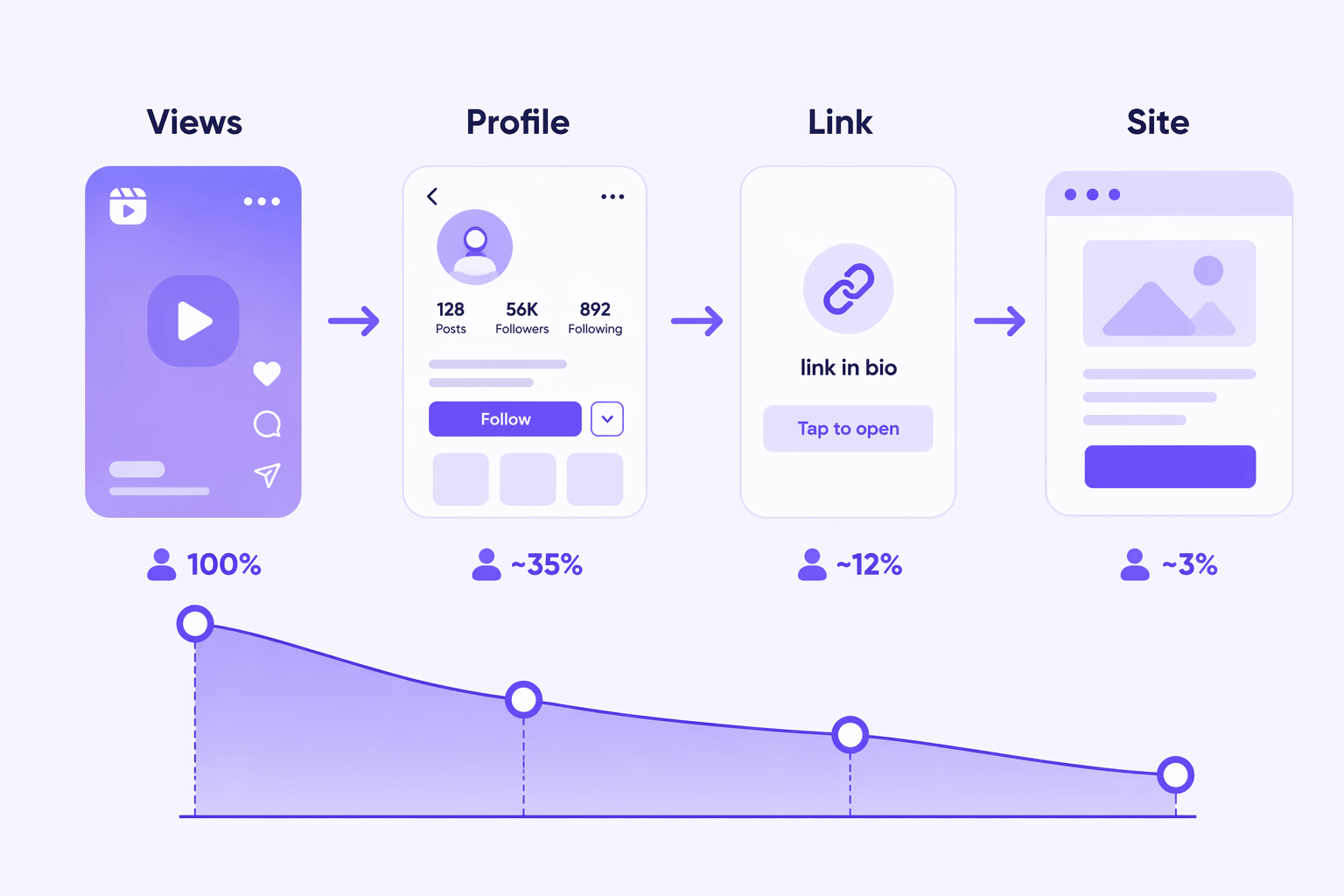
While clicks are getting weaker, something else is quietly getting stronger…

Users are replying. They are commenting. They are opening DMs. At the same time, Instagram is actively pushing this behavior further. This leads to a simple but important shift: Your opportunity is no longer outside the platform but INSIDE it.
When users start interacting instead of clicking away, you’re no longer fighting the algorithm. You’re working with it.
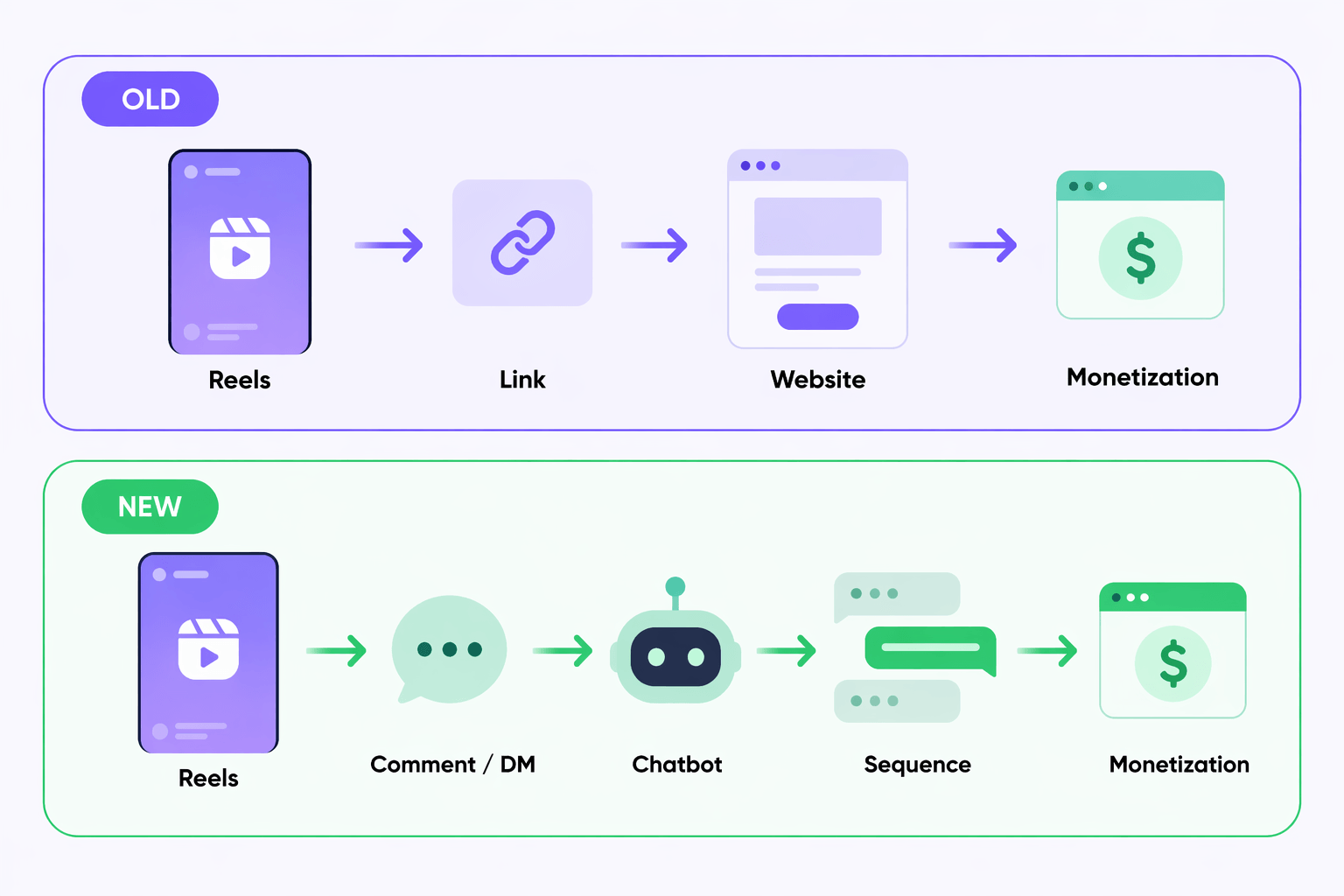
So instead of asking, “How do I get more clicks?”, the better question becomes:
How do I turn attention into interaction?
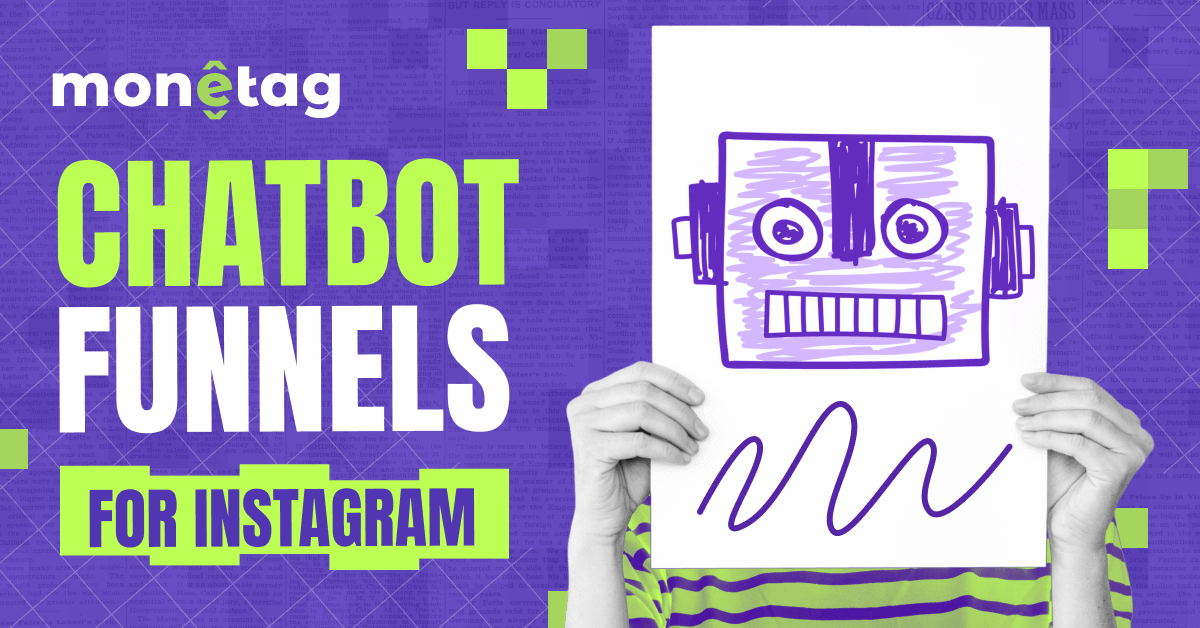
DM Funnel: How It Works and Why It Converts
Let’s break it down, because the mechanic itself is surprisingly simple. Imagine this:
How the flow works
-
1
A user is scrolling Instagram and sees your Reel about top 5 new movies.
-
2
In the video, you say:
“Comment ‘MOVIE’ and I’ll send you a link to a movie fansite where you find a lot more of interesting findings.” -
3
They type “MOVIE” in the comments, and within seconds, they get a DM:
“Hey! Here’s your link”
From there, the conversation continues.
This sequence doesn’t involve waiting or a manual response. Tools like ManyChat make this part seamless, turning what used to be manual conversations into something that works at scale, 24/7. Now, the real question is not how it works (and why it works so well).
- First, it lowers the barrier: Commenting feels natural, almost effortless, especially compared to clicking a link and leaving the app.
- Second, it creates an instant reward: The user takes a small action and immediately gets something in return – that sense of progress keeps them engaged.
- Third comes curiosity: One message leads to another, and before the user even realizes it, they are already inside your sales flow.
- And finally… The environment matters. This all happens in DMs, which feel personal by default. It doesn’t look like a landing page, and it feels like a conversation rather than an ad.
According to recent reporting on Meta Platforms’ strategy, the company is actively moving toward fully automated, AI-driven advertising where targeting, creatives, and delivery are handled inside the platform itself.
This signals a clear direction: platforms are optimizing for keeping users inside the ecosystem and interacting (instead of sending them away). Therefore, once the user is inside that conversation, you are no longer fighting for their attention.
Hooks: What Actually Drives Users Forward
Of course, none of this works without the right entry point. The hook is where everything begins. If it doesn’t trigger action, the funnel never even starts.

Here’s where many publishers overcomplicate things.
You don’t need something “high value” in a traditional sense. You need something that feels immediate, clear, and worth a quick action.
Think about it…Why would someone comment?
Not because they want to learn something later, but because they want to get something now.
That’s why simple formats tend to perform best:
- Checklists that solve one problem quickly
“Comment ‘LIST’ and I’ll send you 5 best movies of the month.” - Short guides that feel easy to consume
“DM ‘START’ to get a 2-minute guide to growing your page.” - Templates people can use instantly
“Comment ‘SCRIPT’ and I’ll send you my viral Reel template.” - Promo codes or small exclusive perks
“Write ‘DEAL’ and I’ll send you a hidden discount.”
The wording matters just as much as the offer.
“Link in bio” feels passive, whilst “Comment ‘LIST’ and I’ll send it to you instantly” creates action.
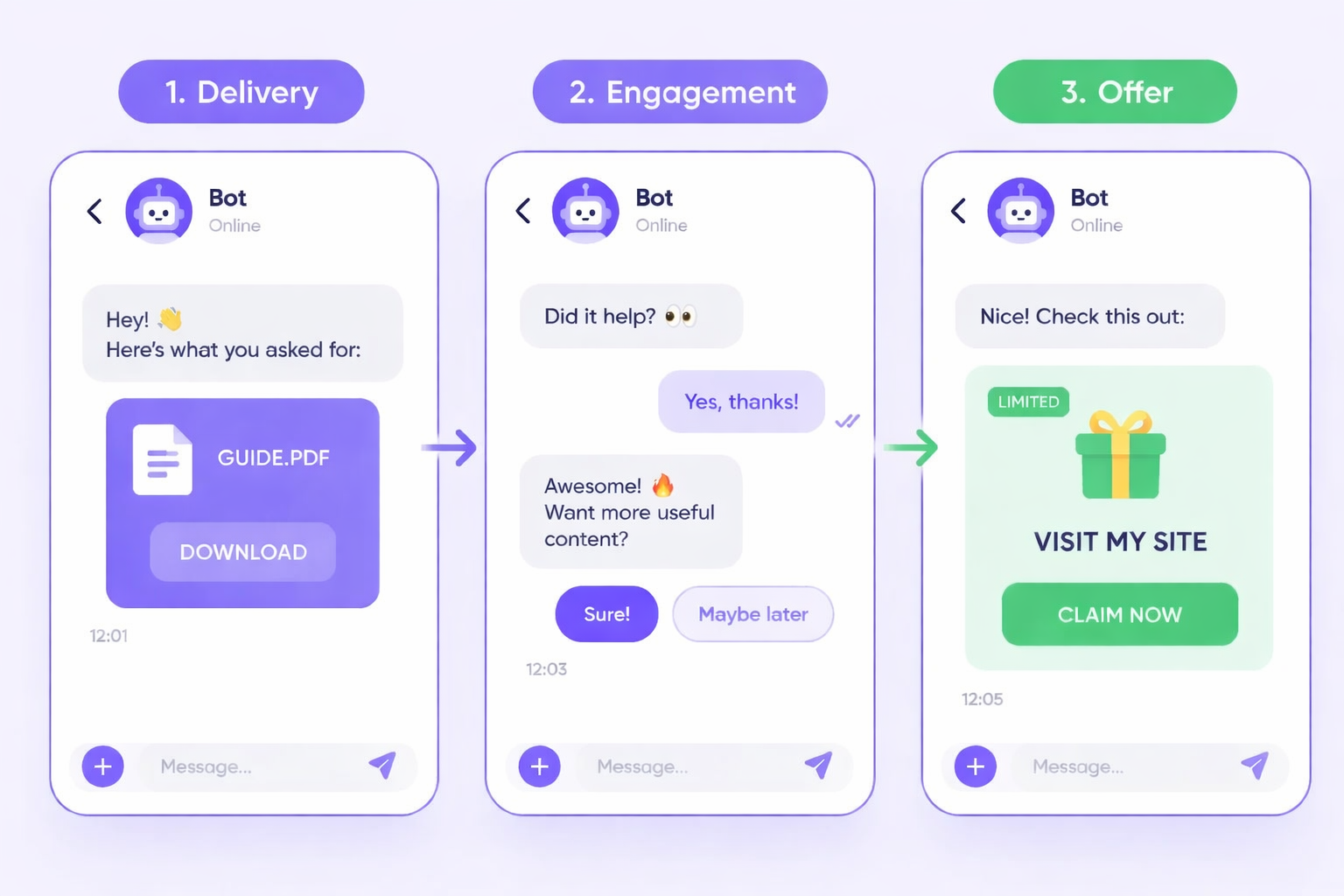
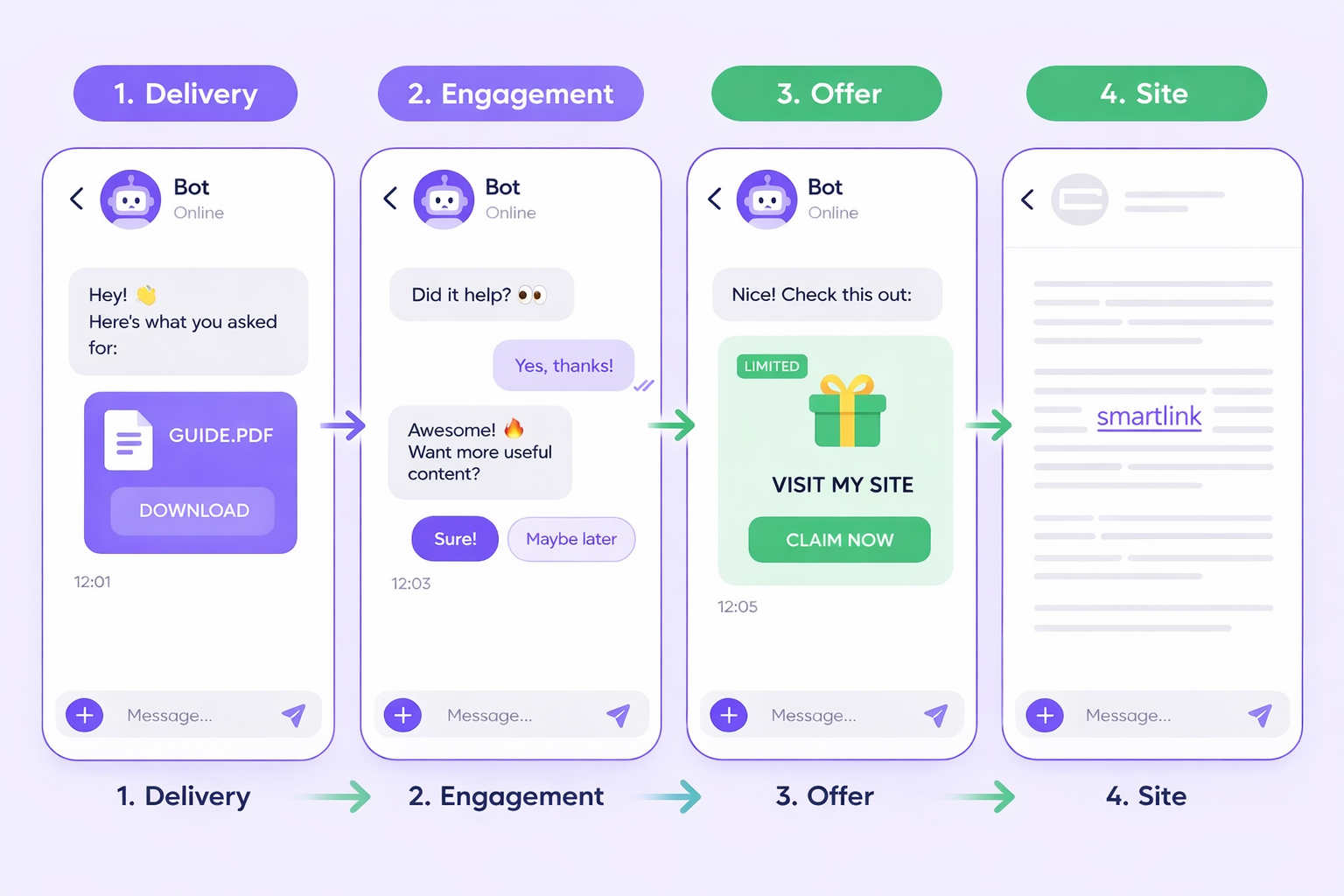
Once the user enters the DM, the sequence takes over, and this is where again, simplicity wins. You start by delivering what was promised, and that builds trust immediately. Following, you add a small interaction (i.e., a question, or a quick reaction). After that, you introduce context (not too much, just enough to guide the user). Only then does the offer appear.
And finally, you push for action.
This behavior is not random. It reflects a broader shift in how users consume content. According to the Digital 2025 Global Overview Report, users spend a significant amount of time inside social platforms, often interacting with content, messaging, and communities within the same session.
This means that the more natural your flow feels inside the platform, the higher the chance the user will remain in the funnel. Spread over time, this sequence doesn’t feel like a campaign but a natural exchange (which is exactly the point!)
Monetization: How Revenue Happens
Now to the part that actually matters.
Where is the money coming from, Lebowski? (Spoiler: There isn’t just one answer!)
Some publishers use these funnels to sell their own products like courses, subscriptions, services… pretty much anything that benefits from a short warm-up.
Others go with affiliate offers, sending users to partner deals or lead generation pages.
Then there’s a more flexible option, especially for publishers working with different GEOs and traffic types.
Platforms like Monetag allow you to monetize this traffic without building separate offers for each audience. With Smartlinks (Direct Links), users are automatically matched with the most relevant offers based on their device, location, and behavior.
So, your funnel can lead a user to your site or page, where you leave Smartlinks that will do the rest of the job for you.
As mentioned earlier, Meta is investing heavily in automation and personalization inside its ecosystem. This means that systems that adapt to users dynamically are becoming the standard, not the exception.
From Views to Revenue: The New Engagement Loop
What makes this model powerful is not just conversion; it’s repetition.
Instead of a one-time visit, you start building a loop.
- A user watches your content.
- They interact.
- They enter a conversation.
- They go through a sequence.
- They interact with your Smartlink (and then they come back for the next piece).
Since all of this increases engagement signals, your next Reel reaches more people. This brings more users into the same loop, and this behavior is fully aligned with how modern social platforms are used.
So over time, it stops being a funnel and becomes a system. Where attention feeds interaction, interaction feeds reach, and reach feeds revenue. Once that system is in place, scaling doesn’t depend on pushing harder anymore. It depends on repeating what already works.
Final Thoughts
This isn’t just another tactic that will disappear in a few months. It reflects a deeper shift in how users behave inside platforms.
People don’t want to leave; they want to interact. They want quick responses, simple actions, and immediate results. The publishers who move first are not the ones chasing more traffic, but the ones who build systems that turn attention into conversations, and conversations into revenue.
If you’re already working with social traffic, this is not something you have to watch from the side, but something you need to test (the sooner, the better).
If you’re looking for a simple way to start monetizing those interactions without overcomplicating the setup, it might be worth taking a closer look at Monetag and how it fits into this flow. At the end of the day, advantage doesn’t come from getting more views, but from doing more with the ones you already have.