Traffic Diversification: How to Survive Sudden Algorithm Changes


Imagine losing 70% of your Google traffic overnight because AI suddenly takes over the world. Sounds extreme, of course. But even if all the GPT-style tools disappeared tomorrow, there’s always a chance you can wake up one day and see your traffic drop to zero. Yes, depending on just a single platform is never safe.
That’s why we asked publishers to share how they diversify their traffic, and in this post, we’ll highlight the best strategies they use.
Why Diversify Traffic?
You’ve 100% heard this ‘don’t put all the eggs in one basket’, but what does it actually mean when you earn from your site traffic? Here is what can happen with your Google traffic if you totally rely on it as a single source:
Algorithm changes
Google constantly changes its ranking patterns. It means you are in the top 5 search results today, but tomorrow you go to page 10, and all your efforts are zero.
Zero-click behavior
Users click less and less once Google began suggesting quick, AI-generated summaries that can fit most users’ requests, especially when it comes to informational content. More about zero-click content.
Sanctions and bans
Any accidental rule violation may result in your ban from the platform, resulting in the loss of your entire traffic flow. It might be a new content policy, an automated moderation mistake, or a sudden rule update you didn’t even know about.
That’s why pro-publishers diversify their traffic sources. Have SEO algorithms changed? No worries, there are alternatives. And here are what exact alternatives they suggest.
Email Marketing

As one of the publishers said, ‘Google can take away your traffic, but it can’t take away your email list.’
And that’s really the point: email marketing is one of the few traffic sources that you own and control. It doesn’t rely on social media algorithms or external platforms.
When someone joins your list, you can reach them whenever you want, so many claim that’s the safest alternative to any other traffic source.
What to Do?
Email marketing requires both proper setup and engaging content. Here is a quick checklist based on what publishers usually do:
- Build your own email subscriber base. There are plenty of ways to do it: with a signup form on your website, through freebies like checklists or guides, inviting your audience through socials, or giving access to exclusive content via emails.
Quick note: Experienced publishers don’t recommend purchasing email lists. Such lists often contain numerous inactive emails and high bounce rates.
- Set up your domain correctly. Here are three checks you need to put so that inboxes don’t mark you as a spammer: SPF, DKIM, and DMARC. SPF tells Gmail who is allowed to send emails using your domain; DKIM is a small signature that proves the email is genuine and hasn’t been edited by anyone, and DMARC tells the inbox how to react if an email appears suspicious.
Most email platforms, such as MailChimp, set up SPF and DKIM for you; you just need to click ‘Verify domain’ in the platform’s settings. DMARC is usually not automatic: you add it yourself as ‘v=DMARC1; p=none;’ in your DNS.
- Warm it up. Start by sending 5-20 emails at first and slowly sending more. This helps you build trust with Google so your emails don’t go to spam.
- Decide what to send. Publishers often mention simple and practical email formats. Here are some examples:
Sports letter. This publisher creates his newsletters with Beehiiv, uses Canva for thumbnails, and the ESPN API to automatically pull game schedules and scores. He also writes the game summaries manually, but plans to automate that too.
A fun idea from Reddit. One guy complains that in corporate life, you’re expected to talk about sports, but he personally knows nothing and doesn’t care at all. So he wants a daily ‘sports for clueless men’ email that would inform about who’s playing today, basic expectations, and simple game results. Everything should be explained in the dumbest, friendliest way so he can survive office small talk. He insists he’s not the only one who needs it, and he’s most likely right – so this can be your next best idea.
Anime newsletter. A simple and useful email newsletter for anime fans: fresh anime releases, popular series, and notes about the daily anime culture in Japan.
Any Pitfalls?
The biggest problem is that your emails might not reach the inbox at all. A poor technical setup, such as no warm-up, incorrect DNS settings, or a low-quality list, may result in your emails being sent straight to spam. Many people on forums said they had 50k–100k subscribers, but almost no opens, simply because Gmail and other inboxes blocked everything.
Another important note: In Europe, the GDPR requires genuine user consent and a clear unsubscribe option. If you email EU users without their permission, you may face legal consequences. The U.S. (CAN-SPAM) and Canada (CASL) also have rules, so make sure you follow them for your email marketing.
Social Traffic
This is by far the most popular alternative traffic source among Monetag publishers. Take a look at what several of them shared when we asked, ‘Did AI Overviews affect your traffic?’
Publisher 1: ‘Not really. My sites mainly rely on social traffic, especially Reels, so the new AI Overview feature from Google had no noticeable effect. Maybe there was a very small drop from organic traffic, but nothing significant, since most visitors come from social media. It really depends on the platform and consistency.’
Publisher 2: Not really. Most of my traffic comes from Facebook, so AI Overviews didn’t affect me much.
Publisher 3: Yes, there has been a noticeable impact. AI Overviews reduced some of the organic search traffic because users often get answers directly from Google’s summaries instead of clicking through to the website. However, since most of my traffic comes from social media rather than search, the overall effect has been moderate.
So, it’s a popular way to grow your site, and as you can see, a great way to reduce your dependence on Google. The best thing about social media is how fast everything works. Here is what our publishers shared:
- On TikTok, a new page typically starts slowly for the first 1–2 weeks, then traffic grows rapidly after consistent posting.
- You may experience a slight increase in traffic initially, but after the second week, once the account becomes active and gains visibility, the traffic continues to grow steadily.
- On Facebook, it’s similar. My new page started with very low traffic for the first two weeks while I posted 4 Reels + Stories daily, but once my Reels started reaching the “Explore” feed, the traffic became very high.

What to do?
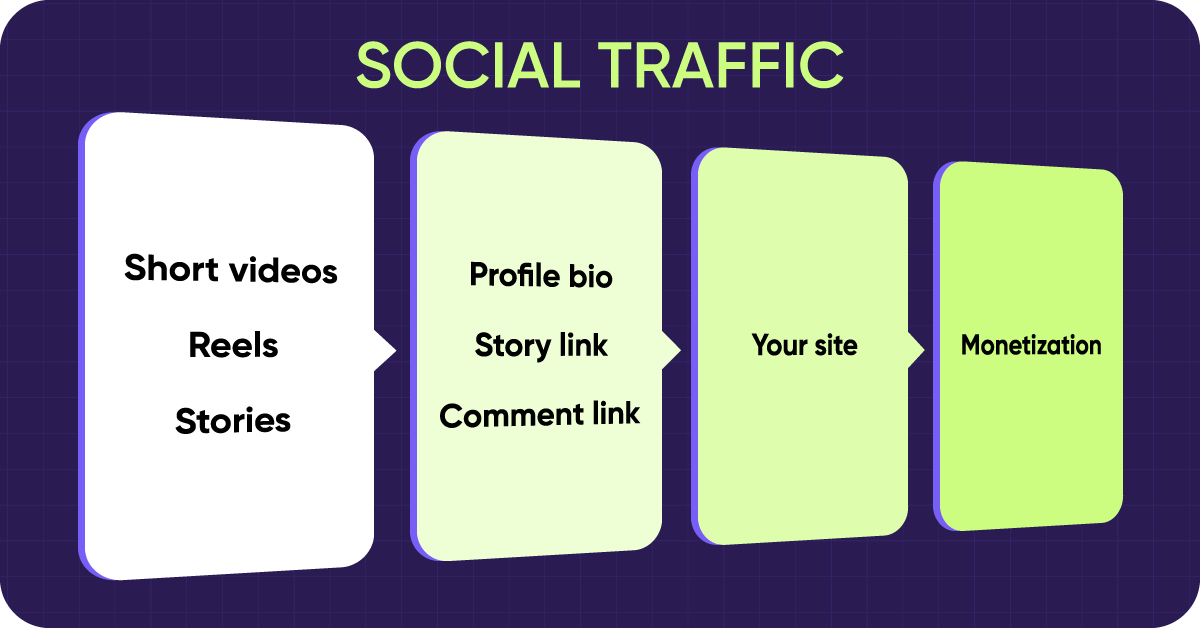
In short, build simple funnels that will lead users to your site from social media. Many publishers grow their traffic by sharing short videos on TikTok, Instagram, or Facebook and adding a link to their site in the bio. Other options include posting quick stories with direct links, publishing short updates on Twitter, and uploading images to Pinterest — some even say that up to 30% of their traffic now comes from Pinterest alone.
Here we shared ready-made funnels for social media:
The real secret here is consistency: everyone we talked to said the same thing: you need to post every day. A couple of videos or stories per week simply won’t work out in most cases.
Any pitfalls?
Just like SEO, social media depends on algorithms — and when those algorithms change, your traffic can suddenly drop. Some people call it a shadow ban; others say it’s simply weak content, but anyway, you can face unexpected declines. Here are a couple of stories:
Publisher 1: Once Facebook reduced my page reach, traffic dropped. I focused more on Reels and engagement, and traffic came back after some time.
Publisher 2: Once, X (Twitter) changed its algorithm and reduced the reach of link posts drastically. My traffic dropped overnight because fewer people saw my content. I had to adapt by focusing more on video-based content and using comments or pinned posts to drive users to my site instead of relying on link previews.
Publisher 3: My content only works when big cricket matches are happening. When the matches stop, my views stop too because my whole category depends on those big events.
YouTube Traffic
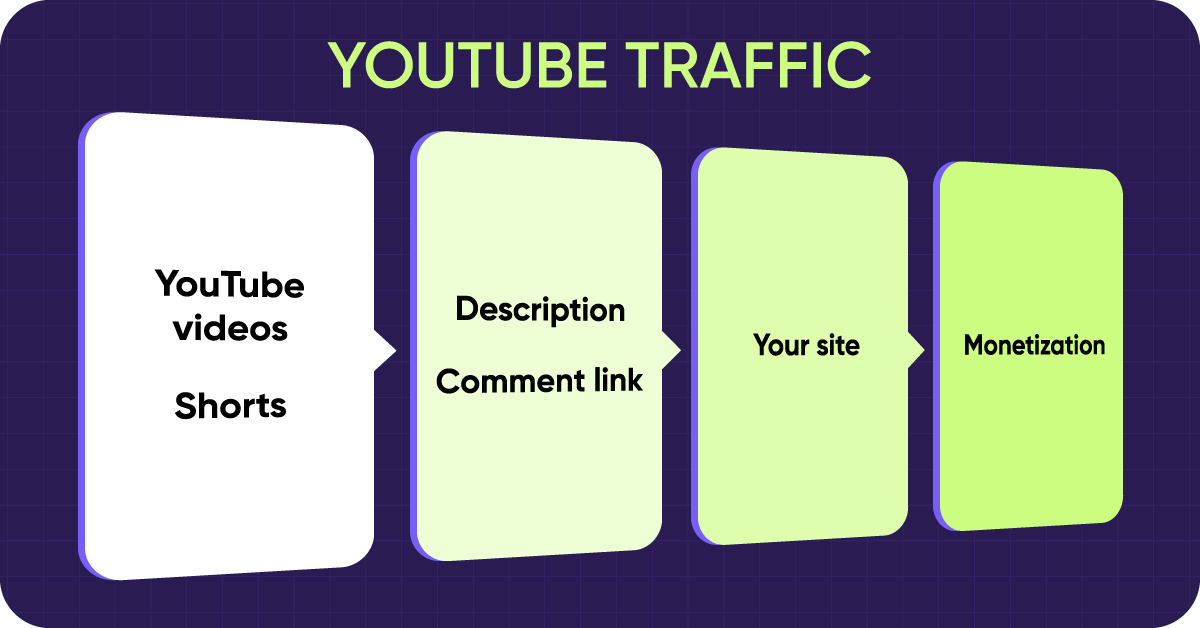
YouTube deserves its own category because it works differently from other social platforms and often brings a more mature, engaged, and ready-to-pay audience. Some publishers say this is the channel where people actually stay longer, trust the creator more, and follow links more actively.
What to do?
Well, videos, apparently? Yes, that’s one of the ways – creating either short or long video content. Some publishers say the format depends on the audience: younger people tend to watch shorts, while older viewers prefer long videos. Others argue: if the content is addictive, even your 80-year-old grandpa will watch YouTube Shorts all day after years of watching long videos.
The best news is that you don’t always need to make videos yourself. Instead, you can work with small YouTubers who already create content in your niche.
One of Monetag’s publishers did exactly that: he partnered with small channels, gave each YouTuber a unique link, and paid them a share based on the traffic they brought. Visitors came to his site, Monetag showed ads, and the revenue added up.
Using this method, his small anime website earned more than $26,000 over a couple of years without him ever becoming a YouTuber.
Learn more about this (and some other) YouTube case studies:
Any pitfalls?
YouTube comes with algorithm issues and aggressive competition. Videos can get flagged easily, especially in high-competition schemes and niches like money-making, where creators mass-report each other. Some people even build cheap bots to flag competing channels – it costs around $100 to get one made.
As publishers suggest, the best protection is to never link directly to affiliate offers in your YouTube videos; redirecting traffic to your own site or landing page is much safer.
Forums/Discussion Platforms

Forums are a great way to get very targeted traffic. People come there to solve problems or learn something, not just to scroll, so the audience is usually ready to click on useful links.
Also, as some marketers notice, ‘most LLMs like ChatGPT cite Reddit more than any other sites. So having a strong presence on such forums can help your content appear in AI-generated answers as well.
What to do?
The best way to use forums is to be more helpful than promotional. Join conversations, give advice, and add your link when it really fits the topic. If you post good insights, people start trusting you and naturally check your website.

Any pitfalls?
Forums hate spam. If you just drop links everywhere, you’ll get banned fast. Also, don’t post things you’re planning to buy or build.
As one user warned, ‘you should really think twice before posting the domain you want to buy in a public forum full of people that can snitch it.’
Also, you need time to build trust on forums.
Messengers
Many publishers say messenger traffic feels stable and personal: something between email and social media, but with faster reactions.
What to do?
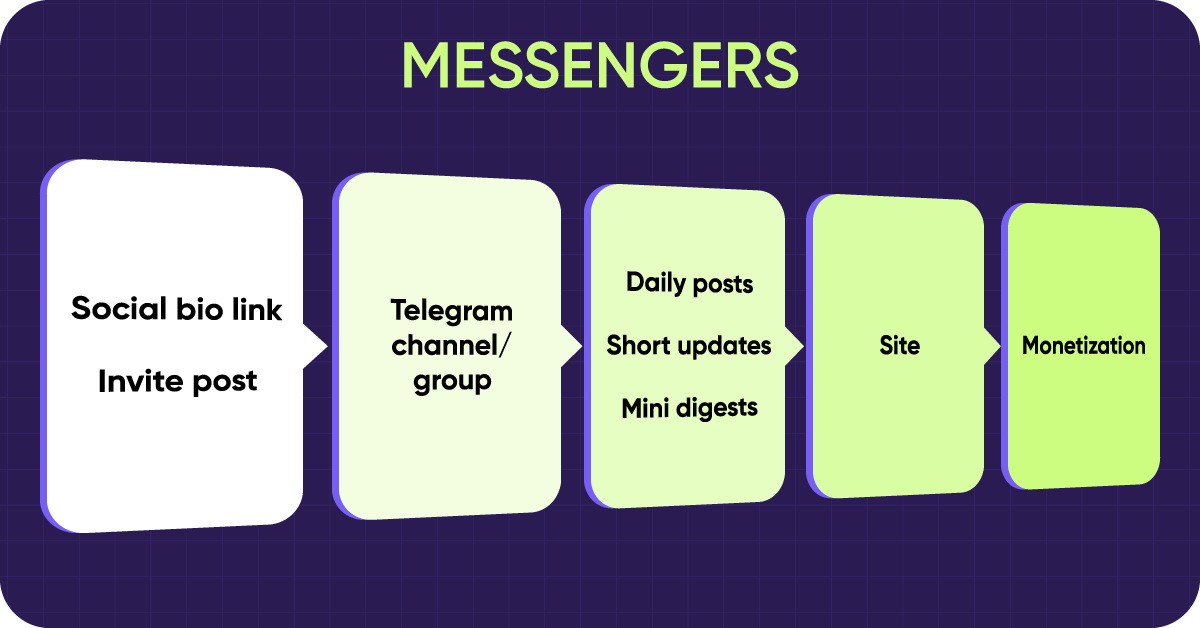
You can create your own Telegram or WhatsApp channel or group, share useful updates, post your content, and build a community around your niche.
Some publishers run mini-digests, short tips, or quick news updates that link back to their sites. Collaborations work well too: you can exchange mentions with other channels or buy ad spots in niche groups with the right audience. Even small channels can send very engaged traffic.
Here is one example from Monetag publishers: he adds his Telegram channel link in the bio of his TikTok, and posts his new articles daily with links to the site.
Any pitfalls?
Messenger traffic is fragile: if you stop posting, engagement drops fast. Channels can also be banned or restricted, especially if you post sensitive topics. Another challenge is growth: unlike social media, messengers rarely go viral, so you need active promotion to attract new followers. And, avoid spamming people directly, or your account may get flagged.
To Sum Up
SEO is unpredictable these days. You can do everything right and still wake up to a sudden traffic drop because there was an update rolled out overnight. The good news is, there are many other ways to grow and monetize all of your alternative traffic sources with Monetag.