
| Tool | Core Feature | Pricing | Monetag Integration |
|---|---|---|---|
| Monetag SmartLink | Dynamic offer routing to match every visitor to the highest-paying offer by GEO, device, and time of day (in real time) | Free RevShare model, no platform fee | Place the SmartLink itself (URL) directly in the YouTube description or landing page |
| Beacons | Link-in-bio hub with built-in digital product store, email capture, AI media kit, and per-link analytics | Free tier 9% transaction fee on free plan; from $10/mo (still 9%) or $30/mo for 0% fees | Embe SmartLink as a button destination |
| Linktree | Simple multi-link hub with the widest brand recognition and unlimited links on free plan | Free tier 12% fee on sales (free plan) or paid from $8/mo (Starter) | Add SmartLink as a destination URL |
| Shorby | Mobile-first smart page with messenger chat buttons, RSS feed integration, and conversion-oriented analytics | From $15/mo No free tier, and a 5-day trial only | SmartLink embeded as a button |
| Replug | Branded link shortening with retargeting pixels (Facebook, Google, LinkedIn), CTA overlays, A/B split routing, and traffic-source analytics | From $19/mo Basic: 10k clicks/mo, Pro $49/mo (50k), & Agency $79/mo (200k) | Wrap SmartLink inside a Replug short link to add retargeting on top of Monetag routing |
Maximizing Your Potential: How to Make Money on YouTube?

This post is also available in:
 Pt
Pt  Es
Es
Disclaimer: Initially published in May, 2025, this article was edited for accuracy reasons by Liza Dmitrieva, Senior Marketing Manager with almost 10 years of experience in Marketing, SEO, and traffic monetization.
Key Takeaways
- YouTube Ads vs. Smart Links: Smart Links generate up to 2-3x more revenue for low-tier GEOs.
- YPP Alternative: You dont need 1,000 subscribers to start monetizing traffic with Monetag.
- Case Studies: SEO is still the king, CTAs can be placed on YouTube as well, and originality pays.
When the first man stepped on the moon’s surface, millions of children wanted to become astronauts. Today, if you ask an average child about his desired activity when he grows up, be sure to hear “I want to be a YouTuber” in 8 out of 10 cases.
Did you know that there is only one resource more popular than YouTube? Yup, you got it, it’s Google. The second most-visited website in the world is YouTube, with its 2.514 billion active users monthly.
What does it mean for publishers? This is a golden opportunity to tap into this vast audience and monetize YouTube traffic. This article will guide you through the process and offer insights from our partners, YouTubers:
- Raj Patel – dedicated sports reviewer with a themed channel and blog)
- Mr. Naveed Shah – creator of a successful channel on how to make money with YouTube and blogging
- Tricky Yar – YouTube channel owner who knows how to earn from media content
- Ajaba – Monetag’s customer and a successful publisher who creates websites about video games
All of them successfully drive traffic to their blogs and websites from YouTube. This article is based on their experience and the recommendations they gave us.
Disclaimer: Please note that some of our partners have asked us not to include links to their channels in this article for confidentiality reasons.
Contents
Working with YouTube traffic: engaging content is a king
Raj Patel is a passionate reviewer of sports events and video games (mainly – soccer simulators, so his two hobbies are interconnected), and the first thing he did was master the art of creating engaging content. He says:
To be honest, it took me about a year to grow my YouTube channel. Attracting an audience is a matter of research, intuition, and your own interest as an author. So researching trending topics and being really involved in content – here are my main success secrets.
Creating content isn’t just about the subject; it’s about the passion you infuse into it. If you love what you do, your audience will feel that connection.”
With YouTube Shorts now averaging over 200 billion daily views globally as of June 2025, monetizing short-form content requires adapted link strategies. YouTube’s official guidance also shows that URLs in Shorts descriptions and comments are non-clickable, so if you’re looking for a recommended workarounds check channel profile links (up to 14 links supported) or link aggregation tools such as Linktree linked from your channel page.
And our partner Tricky Yar adds:
I have been working for the last 6 years. I have multiple channels. Tech news, online earning, and sports channels… and yes, the main thing to say is that only engaging content can help you start and later – succeed. By the way, remember to make it all original each time and not to use clips of another video, pictures, title, and description.
So, the key to attracting an audience on YouTube is producing high-quality videos that are both entertaining and informative. Here are some content creation tips:
- Be authentic: be yourself, and let your passion shine through your videos. Authenticity helps build a loyal audience.
- Consistency: stick to a regular uploading schedule to keep your viewers engaged and coming back for more.
- Engage with your audience: respond to comments, ask for feedback, and create a community around your channel.
“Consistency is the heartbeat of a successful YouTube channel. Treat your audience like a community, not just viewers, and they’ll keep coming back,” – Raj says.
However, quality content is not enough to bring users and money. What else you need is…
SEO, SEO, and SEO again
To get organic traffic from YouTube, you must optimize your channel for search engines. This involves:
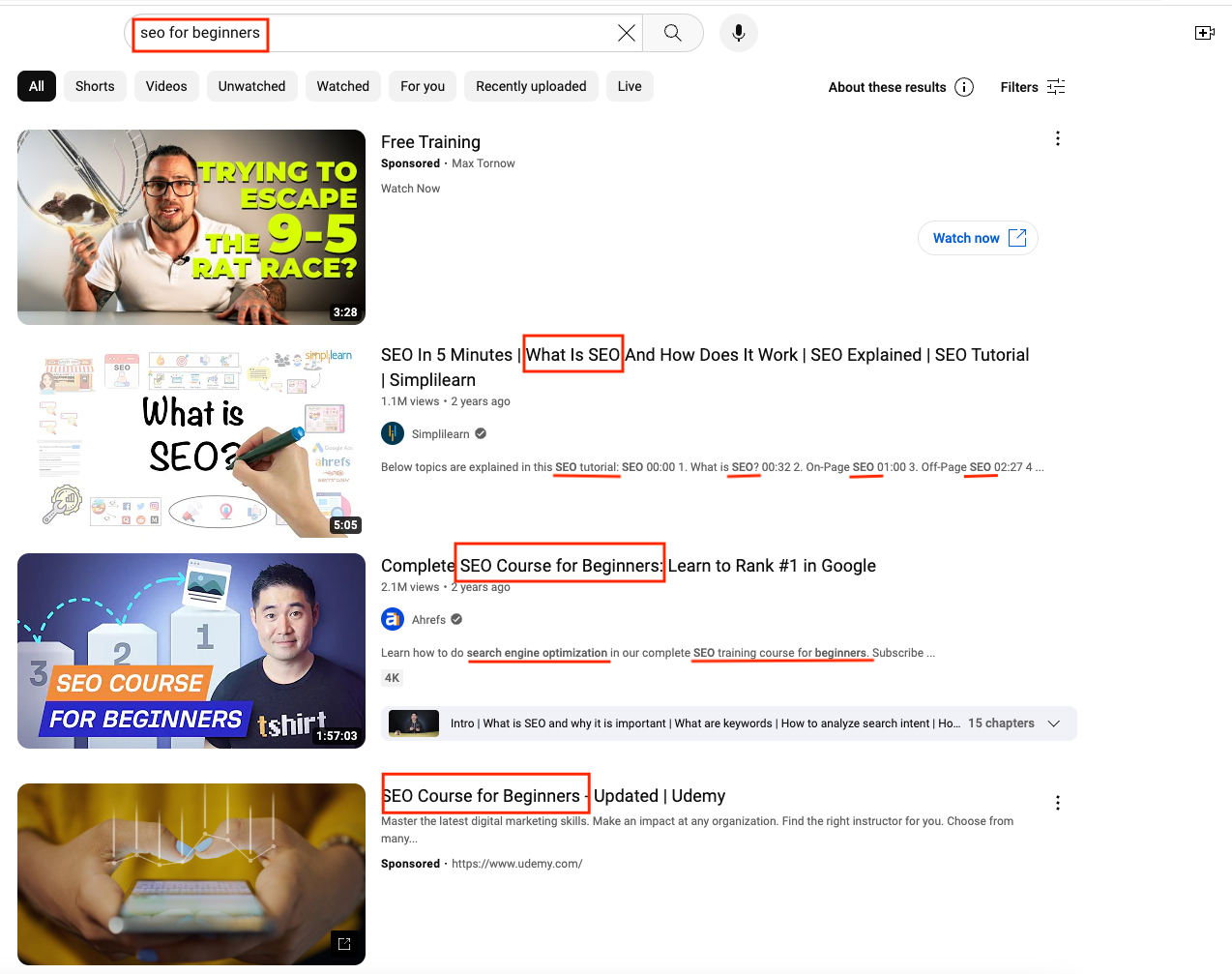
Keyword research: use tools like Google Keyword Planner to find relevant keywords for your niche. Incorporate these keywords in your video titles, descriptions, and tags.
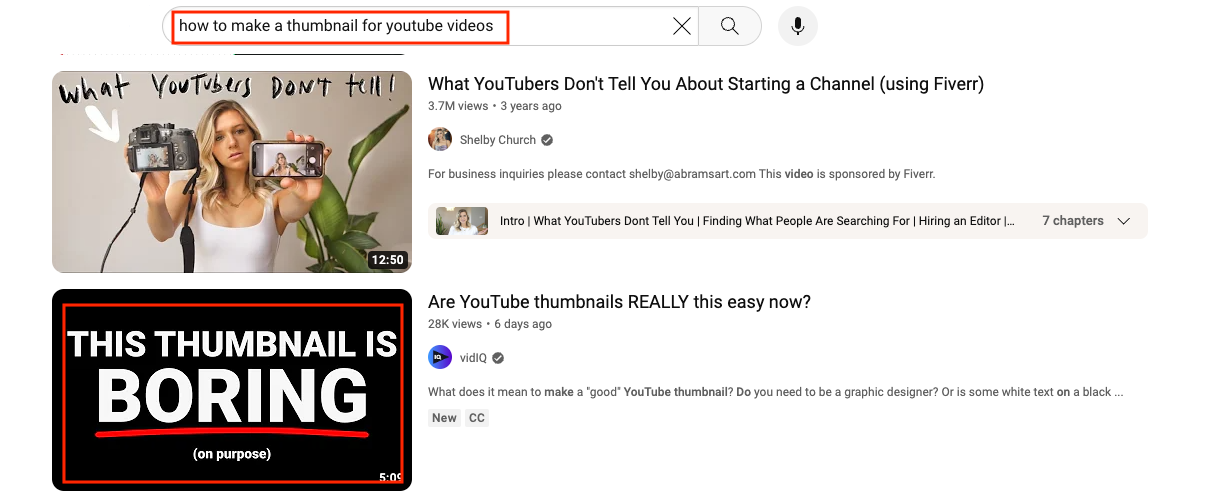
Compelling thumbnails: eye-catching thumbnails can improve click-through rates. Use images that convey the essence of your content.
Video descriptions: Write detailed and informative descriptions for your videos, including relevant keywords and links to your website.
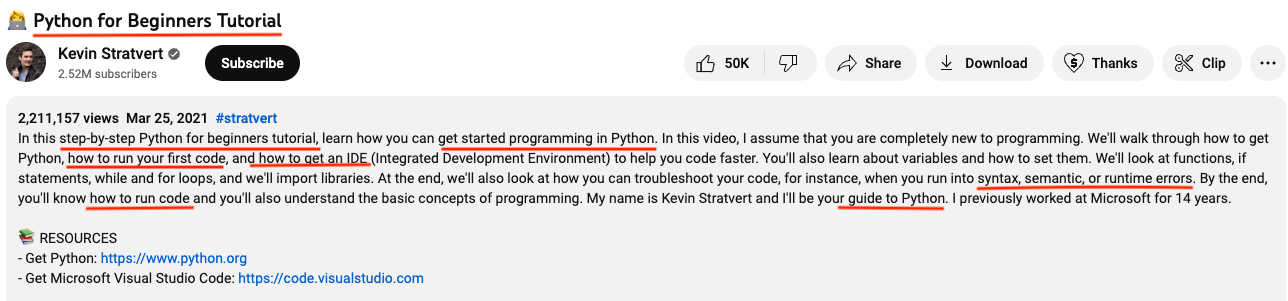
Backlinks: integrations result in mentions of your channel on the other websites, mentions are backlinks that lead to better visibility (maybe, you know that Google/YouTube perceive resources with backlinks as reliable).
Q: Does YouTube SEO work differently from Google SEO?
A: Although the two share the same parent company, they use different ranking signals: YouTube measures watch time, click-through rate, and engagement (likes, comments, shares), while Google focuses more on backlinks and domain authority. And keywords matter for both, but YouTube thumbnails and titles have the same CTR pull that meta descriptions have for Google.
Careful though: Based on observed patterns in link placement testing, aggressively placing CTAs in every video description can negatively affect audience engagement. What some creators are doing, and you can test on your audience, is to place one direct CTA for every three videos. Then analyze and scale further.
Okay, what to do next if you own a website or blog and want to bring more traffic there using your YouTube channel? Let’s see.
Monetizing YouTube Traffic: leading viewers to your website
Raj Patel utilizes several strategies to drive traffic from his YouTube channel to his blog. Here’s how you can do it:
- Call to action (CTA): in your video, encourage viewers to visit your website, but give them a reason to do so. Offer additional content, resources, or exclusive materials available on your site only.
If you want to maximize your Revenue Per Mille (RPM), align your Call-to-Action (CTA) with relevant Cost Per Action (CPA) offers since it can improve your traffic quality. Also, dynamic Smart Links can assist you in routing, though performance will vary by audience, niche, and offer type.
- Video end screens: use the end screens feature to promote your website and other related videos:

- Links in the description: always include a link to your website in the video description.
Top 5 Traffic Routing Tools for 2026
Can you have a CTA on YouTube and get monetization?
You can have a CTA on YouTube and still get (and keep) monetization – that’s exactly how most creators move traffic to their websites, blogs, or offers. You’re can always say things like “check the link in the description” or “visit my site for more,” and support that with on-screen text, cards, end screens, and links under the video. The CTA itself isn’t the issue; YouTube mostly cares about where you send users and whether everything follows their Community Guidelines and ad-friendly policies.
Monetization problems start when CTAs push viewers to shady, misleading, or prohibited content (for example, scammy “get rich fast” pages, aggressive or malicious ads, or adult content). If a video looks like pure click-out spam with zero value, that’s also risky. So, keep your videos genuinely useful, add natural and relevant CTAs, be honest about sponsored or affiliate links, and make sure your landing pages are clean and compliant. Done right, CTAs are not only safe for monetization – they’re one of the best ways to turn YouTube traffic into real earnings.
Q: Are affiliate links allowed in the YouTube description?
A: Sure, as long as you disclose they’re affiliate links. YouTube specifically asks creators to clearly label affiliate or sponsored links in the description. Otherwise, you go against YouTube’s policies and FTC guidelines. Just add “this description contains affiliate links” and you’re in the clear.
Instruments and services you will need to monetize YouTube traffic
Here are the essential things you need to get started with YouTube traffic monetization:
- Establish a website or a compelling landing page – you will lead users there to get potential conversions. Conversions entail actions such as making a purchase, submitting their email for your enticing offer, or clicking on your affiliate link.
- Secure reliable hosting services; we’ve provided a selection of budget-friendly hosting providers below.
- Obtain a CPA (Cost Per Action), AM (Affiliate Marketing), or Publishers account. Details for account creation are also outlined.
- Identify a source for your traffic, which can range from social media to leveraging Google, or even through paid advertising channels.
- Set up a payment processor for receiving your earnings. While we’ll suggest a few options, keep in mind that some platforms also offer the choice of receiving payments via mailed checks, albeit with a longer processing time.

Third-party industry estimates place the standard YouTube pre-roll ads global average around $4-$15 CPM for general content (with slight differences by niche, GEO, and seasonality).
Where to buy a domain name?
Bluehost – Bluehost serves as an all-in-one solution for domains, hosting, SSL certificates, and domain privacy. While you only need domain and hosting, an SSL certificate enhances trust, and domain privacy adds convenience. The Bluehost package I recommend includes a free domain and SSL certificate.
Domain.com – Domain.com offers a seamless experience for securing website domain names, online stores, and hosting. Finding the perfect domain is a breeze, and they provide professional online marketing tools.
HostGator – another hosting provider worth considering.
For budget-friendly shared hosting and VPS hosting, you can also explore the options in the BlackHatWorld marketplace.
If you’re looking for other domain providers that offer cost-effective solutions, you can check out the following:
- Namecheap
- Name.com
- BigRock
- Hostinger
While free hosting can be tempting, it comes with its own set of limitations:
- Unwanted ads on your site (not yours)
- Insatiable work
- Limited traffic-carrying capacity
- Minimal customer support
But if you still want one, you can check these:
- AwardSpace (25 cents per month)
- InfinityFree
- Byet.host
- Google Cloud (1 year of free hosting)
- FreeHostia
Bulletproof Hosting
Bulletproof hosting allows more lax hosting conditions (such as working with activities that may breach a hosting provider’s terms of service). However, consider that it ignores DMCA and takedown requests, and it’s typically not cheap. Here are a few bulletproof hosting providers:
- BPW
- FlokiNet
- XOR
- AbeloHost
- Novogara
!Notice: Working with such providers carries reputational and SEO risk and might trigger Google to associate your pages with copyright infringement.
And now, let’s move right to the YouTube strategies.
Monetization strategies: how to earn from that?
Before you start…
The typical challenge faced by aspiring YouTubers is their desire to generate revenue without making a personal appearance on camera. Achieving success on YouTube hinges on a few crucial elements:
- Your niche and audience: building a dedicated audience necessitates catering to a particular topic of interest that your video content will address.
- Video editing software: You can acquire video editing software devoid of watermarks through various channels. Options include purchasing Adobe products at discounted rates from the BHW marketplace. Alternatively, you can explore a selection of free alternatives such as Blender, Shotcut, KdenLive, Avidemux (a basic editor, mentioned here for reference), or Clipify.

To gain YouTube’s algorithm’s attention, your video/channel must receive recommendations to a wider audience. This is achieved through multiple traffic sources, and it also hinges on maintaining a click-through rate (CTR) within a certain range.
YouTube monetization strategies to mind
“I use my blog to provide more content to visitors, and I also have Monetag’s ads there, so it is also profit-making. People can get to my blog right from YouTube since my articles are linked to relevant videos. If you are interested in my CTR, I gained approximately 14%-19% for viral videos on my channel.” – says Raj.
Disclaimer: The earnings discussed are individual results and not guaranteed. For the most up-to-date eligibility requirements (currently between 500-1,000 subscribers and 3,000-4,000 watch hours, along with additional conditions from tier to tier), please refer to the official YouTube Partner Program documentation.
- Affiliate marketing: promote products or services related to your niche and earn a commission for every sale generated through your channel and/or website you lead users to.
- Sponsored content: collaborate with brands relevant to your niche for sponsored content on your blog or YouTube channel. Make sure that your collaborations make sense from the audience’s perspective. For example, if you review sports or video games like Raj, it doesn’t make too much sense to promote organic cosmetics, right? And here is what Raj adds:
“Plus, if you want your fans to trust you (which is crucial for a content maker), always inform them that the content is sponsored. Make natural and entertaining integrations to keep their attention, but, in my opinion, it doesn’t make sense to pretend that you are not advertising anything when you actually do.”
- Google AdSense: place ads on your blog to generate revenue based on user clicks and impressions. Here, you need to follow YouTube monetization criteria, but note that YouTube has two separate approval processes. In short, these criteria for monetizing a YouTube channel are:
- Join the YouTube Partner Program (YPP) – YouTube Partner Program (YPP) is the official monetization framework that allows eligible creators to get revenue-sharing from video ads, channel memberships, Super Chat, Super Stickers, Super Thanks, and YouTube Shopping.
- Get approved for ad revenue specifically
According to the YouTube Partner Program documentation, reaching the 10 million valid public Shorts views within 90 days and having 1,000 subscribers qualifies your channel for Tier 2 YouTube Partner Program (YPP), which includes revenue sharing.
But, that’s not everything: here are more YouTube channel monetization criteria:
- 1,000 subscribers (no shortcuts here)
- 4,000 valid public watch hours in last 12 months (or 10M Shorts views)
- Linked AdSense account (in an approved country)
- 2-step verification on your Google account
- No active Community Guidelines strikes
Q: What if I don’t meet the YPP requirements yet, can I still monetize YouTube traffic?
A: Of course you can, since YPP only controls the monetization on YouTube itself. So, you can still monetize the traffic you send to your website or landing page using tools like Monetag’s SmartLink. And you’ll send visitors to the best-paying offers regardless of channel size, in no time.
If you applied, and want to YouTube check monetize status, note that there’s no official YouTube channel monetization checker tool. However, these third-party options can help:
- TubeBuddy (Browser extension shows monetization status)
- VidIQ (YouTube monetization checker similar to TubeBuddy)
- Social Blade (Estimates earnings based on public data)
And the best thing: locate Monetag’s SmartLink on your website or landing page where you plan to direct your audience from YouTube – this is the easiest way to start monetizing your audience!
“I’ve been on YouTube since 2016, and I’m doing really great. I have worked in five different niches, like movie’s suggestions, cricket info, free themes and plugins, and crypto airdrops.
How to make money? I’m not claiming to be an expert, but I do have some experience in those five niches. Out of those, I think crypto airdrops and movie suggestions can be really helpful for driving traffic from YouTube to your website. To do this, you’ll need a YouTube channel and be consistent in your efforts. Currently, I’m focusing on crypto airdrops and movie suggestions.
This work can be challenging because you’ll need to create a video every day. However, there’s another option if you have the budget. You can hire someone to create videos for you by paying them.”
Actionable Step-by-Step To Place Your Monetag SmartLink
- Analyze audience retention graphs in YouTube Studio
- Identify drop-off points
- Insert your Monetag SmartLink through a pinned comment exactly 10 seconds before the average drop-off occurs (or near high engagement moments)
Note: This is just one strategy example you can try, and not a validated YouTube tactic.
For a dessert: a brief case study from Ajaba
Our partner Ajaba eagerly shared a secret recipe for his YouTube traffic monetization (but you can use this strategy for website monetization, as well). Enjoy:
Ajaba used “the biggest marketing trend of our century – influencers”. As he reveals, one doesn’t need to rob a bank to work with influencers. What is more, you don’t even need to be a celebrity to succeed. Ajaba says that he made money with a website that didn’t have too much traffic at the beginning:
“What if told you, that to use influencers marketing you need nothing but a website or an app, Monetag to monetize it, and $0!”

Intrigued? Here is the recipe our partner shared:
- Find YouTubers who have the same topic as your website or app, just make sure these influencers are either small or medium (Ajaba targeted YouTubers with decent viewers and their subscribers ranged from 10k to 100k)
- Send them an email describing your website briefly, and ask them to promote your project, article or promo in their next video and content description
- Discuss pricing, since you’re a beginner and probably don’t have too much money, you may propose to pay on a monthly basis, depending on the amount of traffic they brought. Offer a percentage and arrange it for a long term. It’s not likely that a YouTuber will refuse from passive income.
And here are the results reflected in statistics. This is how the backlinks performed:
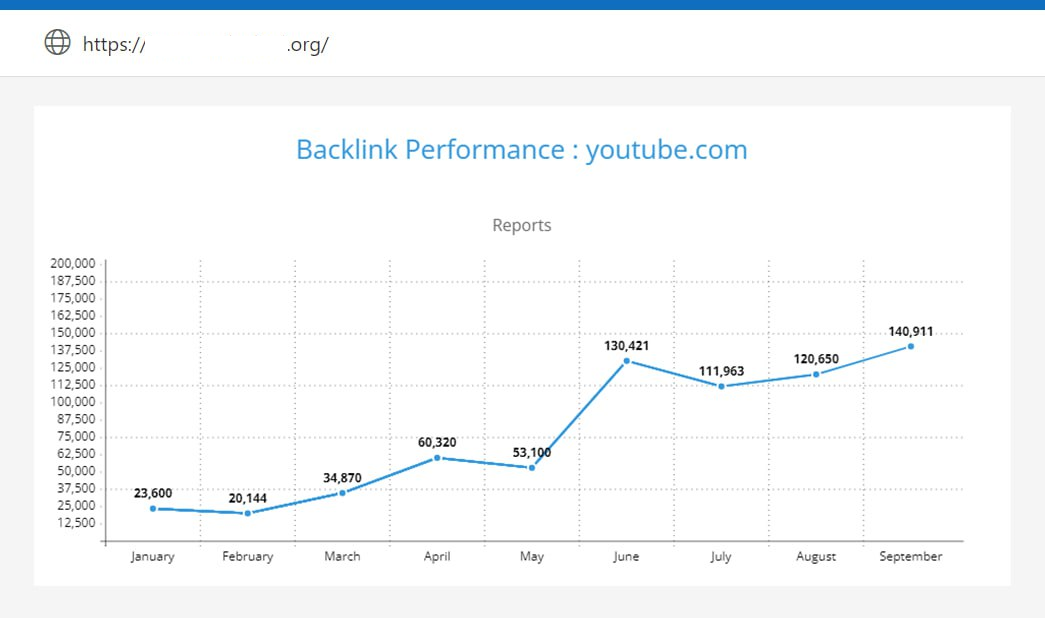
We have also asked Ajaba about tracking his influencers’ input. And here is what he said:
“The answer is Google Analytics, when I provide the YouTuber with my article link, I use Google Analytics to see how much traffic was generated from YouTube on that specific article. Therefore I judge on how much I will pay the YouTuber regarding our initial agreement. The payment is always based on the traffic he brings to that specific article.
If I give one YouTuber many links to specific articles, then I check the traffic that was brought from YouTube to all those links. Then I combine it and decide on how much I’ll pay.
Please keep in mind that I don’t give the same link to many YouTubers, each of them has an article to promote so I can diversify my traffic and make it more targeted.”
Q: So how much traffic do you actually need from YouTube before monetization starts paying off?
A: While there’s no universal threshold, the model you work with counts more than the volume. For instance, when it comes to Ad-based monetization (AdSense, Monetag), what matters most are impressions, so even smaller traffic can give you a good income with a good GEO-quality. In Ajaba’s case, it’s the targeting – a couple of hundred highly relevant visitors can outperform thousands of untargeted ones.
To conclude
In conclusion, our partners’ journeys exemplify how a website owner can successfully drive traffic from YouTube and monetize that traffic. Remember, building a loyal audience and consistently providing value should be at the core of your strategy.
Q: Does utilizing third-party CPA networks like Monetag violate YouTube’s External Links Policy?
A: No, as long as the linked content complies with YouTube’s Community Guidelines and does not redirect to deceptive, harmful, or prohibited sites. Just keep in mind not to excessively post affiliate content across dedicated accounts, since it may trigger YouTube’s spam policy. Also, if you’re one of the creators reaching US audiences, know that you’re independently required to comply with FTC Endorsement Guides, which clearly ask for prominent disclosure of affiliate relationships.
With dedication and smart tactics, you can maximize your website’s potential and turn YouTube traffic into a valuable asset. And don’t forget Monetag’s SmartLink to ensure profit!