
| Scenario | Cost | Risk | Long-Term Impact |
|---|---|---|---|
| Omega Indexer | Paid (credits) | Medium, opaque methods flagged by users | Short-term discovery only |
| Doing Nothing | Free | None | Slower, but Google filters naturally |
| Fix Discovery Fundamentals | Time/effort | Low | Compounding SEO value |
Omega Indexer Review: When Indexing Helps and When It Doesn’t

That silent gap – between a backlink being live and being indexed – is where Omega Indexer positions itself. And according to many Omega Indexer reviews, the tool promises faster visibility for backlinks and URLs by pushing them toward Google’s discovery layer.
But for a publisher willing to monetize a website, the real question isn’t “does it index?” – it’s “does indexing actually move revenue?”
Let’s answer that honestly.
Contents
What Omega Indexer Really Is
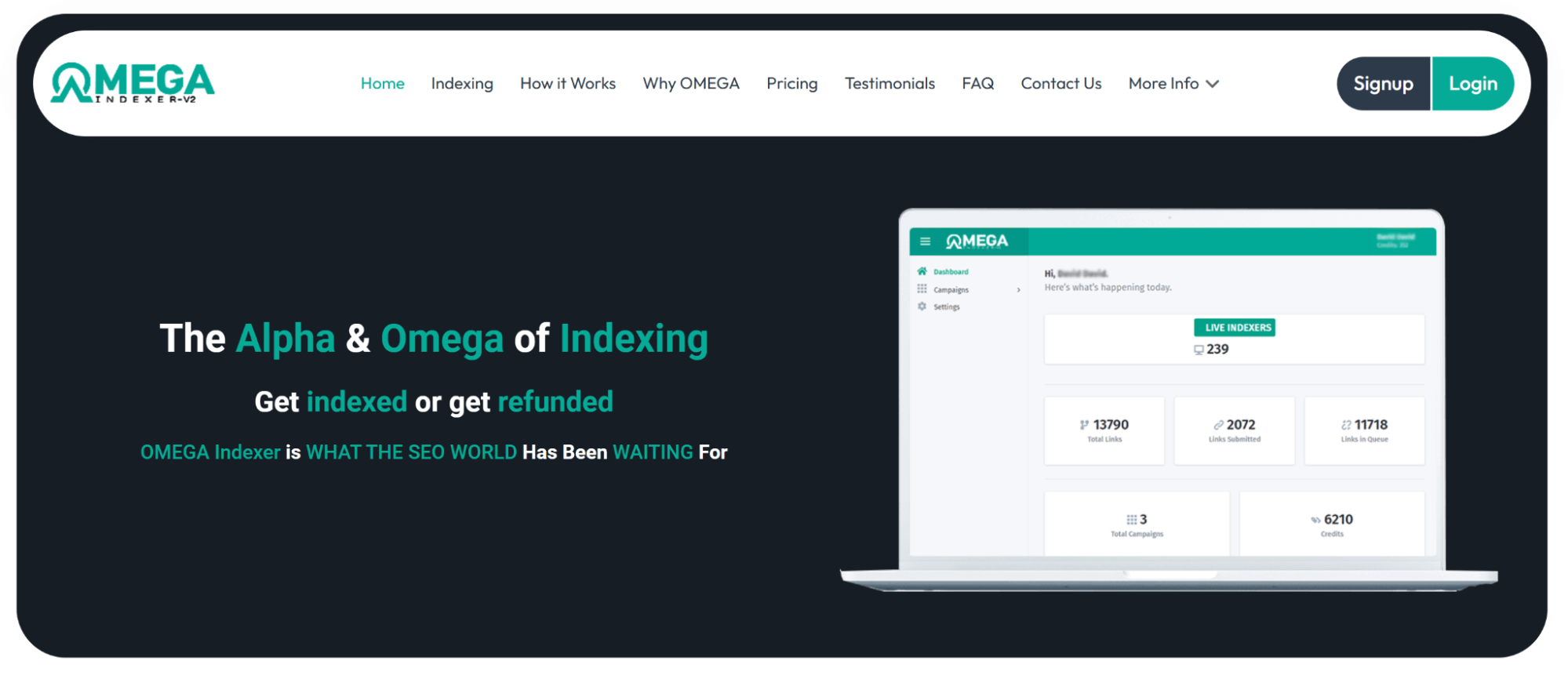
Image Source: Omega Indexer
Omega Indexer is a backlink and URL indexing service (an Omega link indexer), built to accelerate the discovery of links and pages that Google hasn’t crawled on its own. You submit URLs, consume credits, and the system sends automated indexing signals intended to trigger crawling and indexing faster than natural discovery.
That’s not controversial. Google itself confirms that discovery relies on links, sitemaps, and crawl signals, not guarantees.
What is controversial is the implied promise: that indexed links equal SEO impact.
They don’t.
The Indexing Illusion: The Gap Most Omega Indexer Reviews Ignore
Here’s a foundational truth most tools don’t emphasize:
Crawling ≠ Indexing ≠ Ranking ≠ Traffic
In other words, crawling doesn’t guarantee the page will be indexed, as Google puts it:
Indexing isn’t guaranteed; not every page that Google processes will be indexed.
Just as much as indexing can guarantee ranking, nor ranking can vouch for traffic. This isn’t opinion; it’s documented by Google and reinforced by every serious SEO study.
In fact, many backlinks never get indexed because Google judges them not worth storing. And forcing those links into the index doesn’t magically upgrade their quality.
This matters for you because monetized traffic only comes from ranked pages, not merely indexed ones.
A Quiet Test You Should Run Before Using Omega Indexer
Before spending credits, ask one hard question about every URL:
“If Google discovered this link naturally tomorrow, would it help rank or monetize anything?”
If the answer is unclear, Omega Indexer won’t save you.
Industry data backs this up. Ahrefs famously found that over 96.55% of content gets zero traffic from Google. And not because it isn’t indexed, but because it lacks authority or value.
Indexing only reveals pages, but it doesn’t justify them.
When Omega Indexer Actually Makes Sense
Used selectively, Omega Indexer can be useful, especially for publishers operating at scale. It tends to help when:
- You publish legitimate, monetizable content that’s temporarily undiscovered
- You’ve earned real backlinks (guest posts, editorial mentions) that Google hasn’t crawled yet
- You operate in time-sensitive traffic windows (seasonal, trending, news-adjacent content)
This aligns with Google’s admission that discovery speed varies widely depending on crawl priority and link signals.
In these situations, Omega Indexer may shorten the time-to-visibility. So, not the rankings, but the visibility.
That distinction matters – a lot.
Omega Indexer vs Doing Nothing
Here’s the uncomfortable comparison most Omega Indexer reviews avoid:
When your internal linking is weak, the sitemap is broken or incomplete, or pages lack contextual relevance, you might get a win from doing nothing.
Moz and Search Engine Journal both emphasize that internal links and crawl paths outperform third-party indexing and ranking tricks long-term. However, if Google can’t find your pages through your own site, an indexer is a band-aid, and not the solution.
The Hidden Risk: Forced Indexing and Signal Pollution
Some users report that aggressive indexing tools introduce unnatural link noise (fast bursts of crawl signals that don’t align with organic discovery).
Google’s spam guidelines are explicit: manipulating link signals at scale carries risk, especially when links exist “primarily to influence ranking” (Google spam policies).
That risk doesn’t always show up as a penalty, but as something worse: ignored links.

Omega Indexer Price vs Real Cost
The Omega indexer price, often cited around a few cents per link, feels cheap. But the real cost isn’t credits. It’s an opportunity cost.
Every dollar spent indexing weak links is a dollar not spent on:
- Updating content to retain rankings
- Improving UX to raise RPM
- Strengthening internal link structures
Monetag publishers know this well: traffic quality compounds earnings more than raw volume.
Final Verdict: A Tool, Not a Strategy
Omega Indexer isn’t useless, but pretty often – misunderstood.
Used surgically (on worthy URLs that already align with Google’s quality signals), it can speed up discovery and shorten revenue lag. Used blindly, it becomes a quiet tax on bad SEO decisions.
The smartest move isn’t choosing Omega Indexer or doing nothing. It’s knowing when each option wins. That and having the discipline to do less when less is smarter.
That mindset – not the tool – is what protects traffic, rankings, and monetization in 2026.
And if you’re ready to kick-start your monetization…